SUNSET BOULEVARD
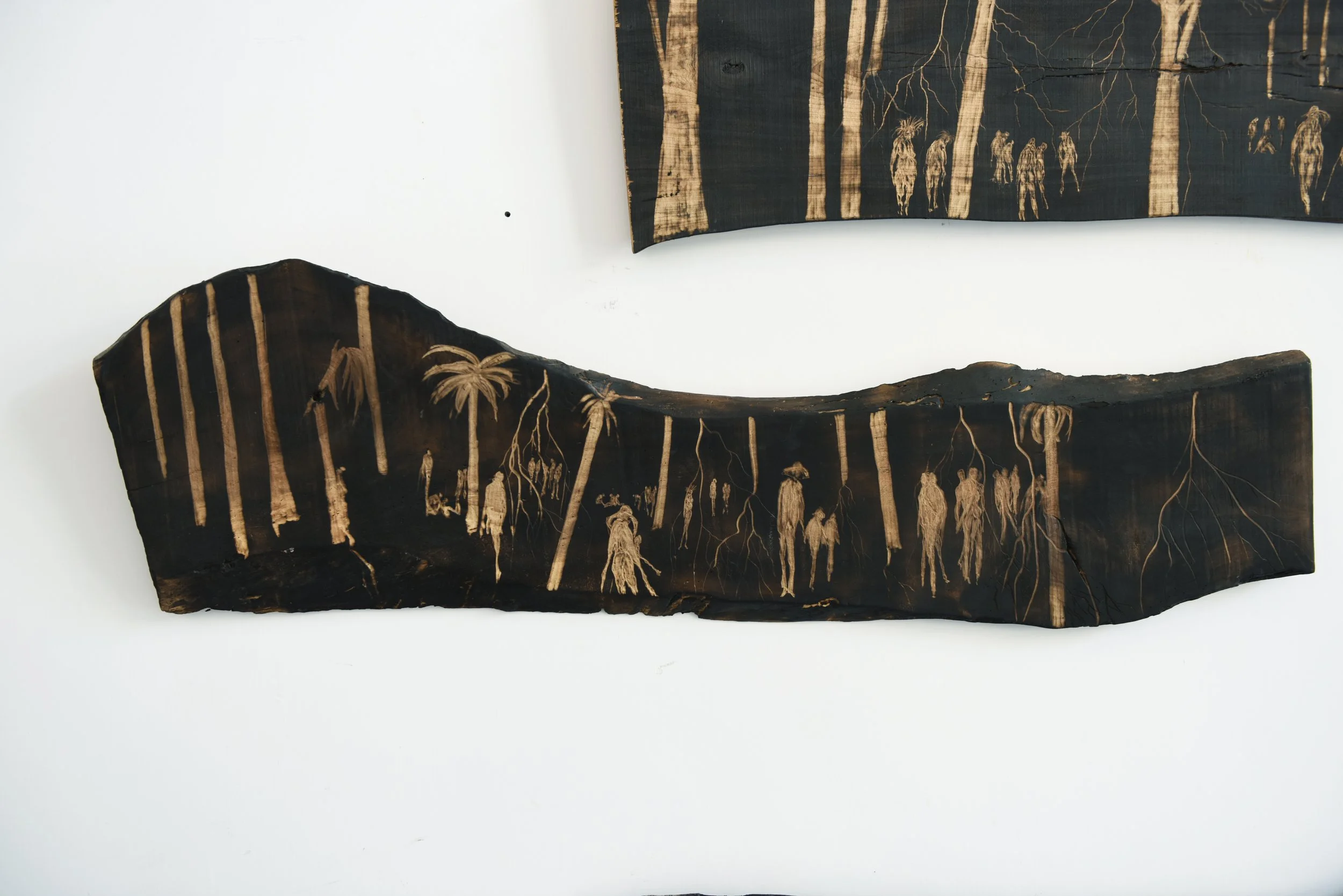
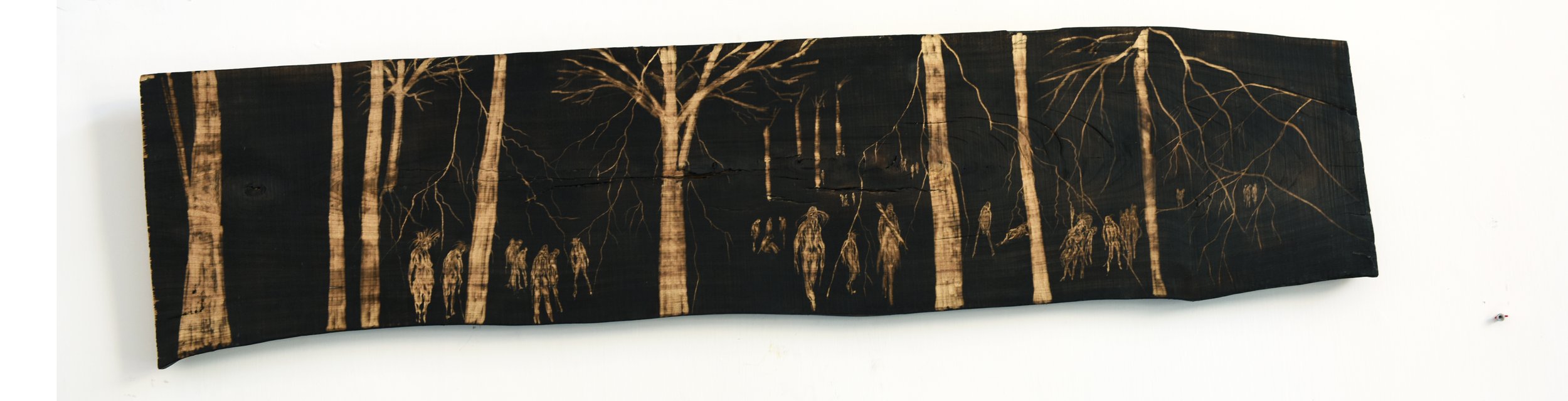
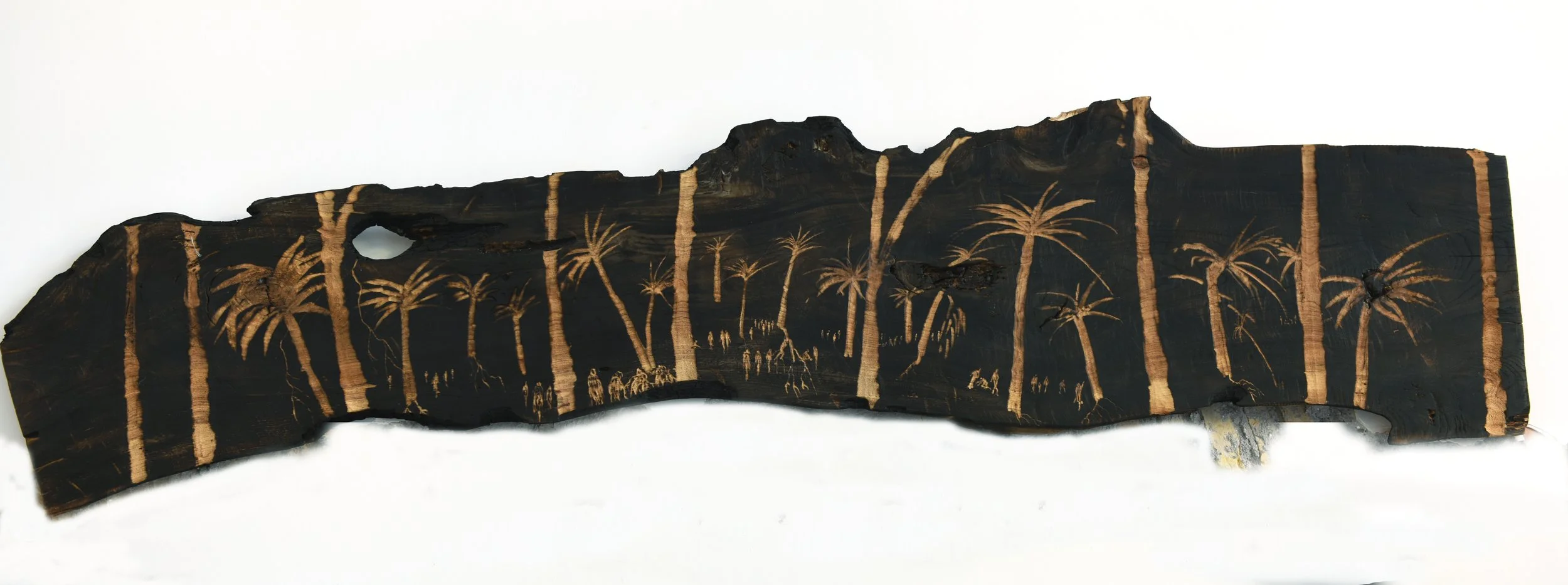
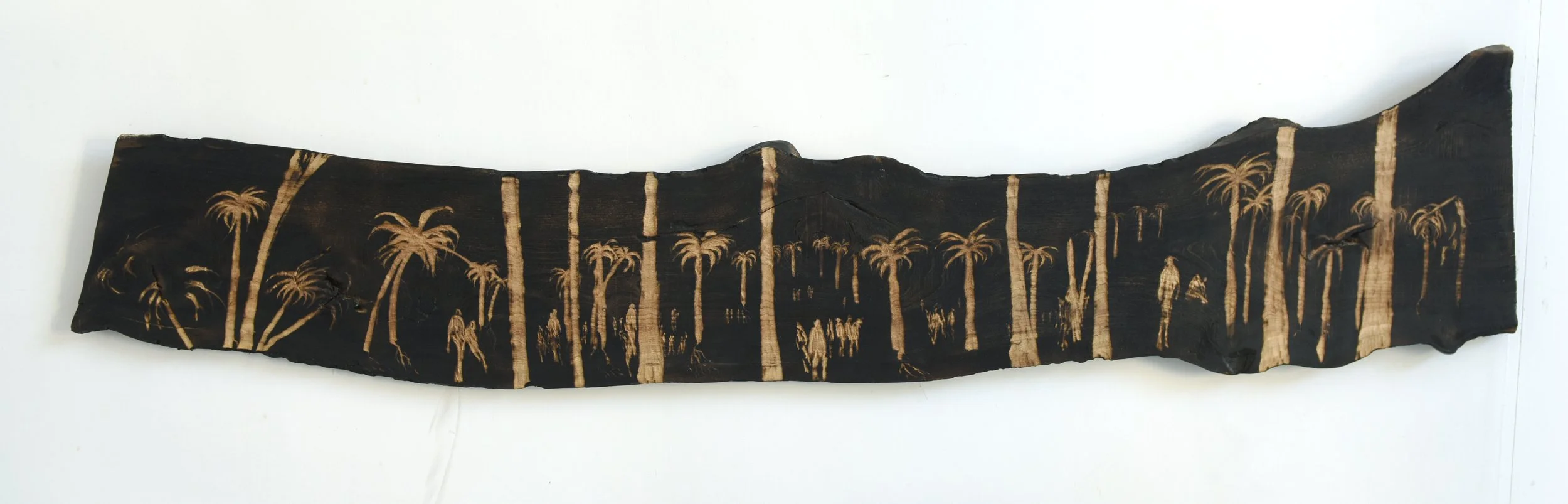
Sculpture on burned wood — a silhouetted procession caught between departure and disappearance.
SUNSET BOULEVARD
Sunset Boulevard emerged from a journey to Los Angeles in the aftermath of the fires, at a moment of social tension and immigration enforcement operations, when many of the symbols upon which the city — and more broadly the American imagination — had been built seemed suddenly fragile, almost obsolete.
Los Angeles has long embodied the mythology of expansion: the conquest of the West, Hollywood and the fabrication of dreams, endless growth, mobility and the promise of individual reinvention. Yet confronted with burned landscapes, ecological vulnerability and social fracture, these inherited symbols of progress seemed disconnected from the fundamental conditions that sustain life.
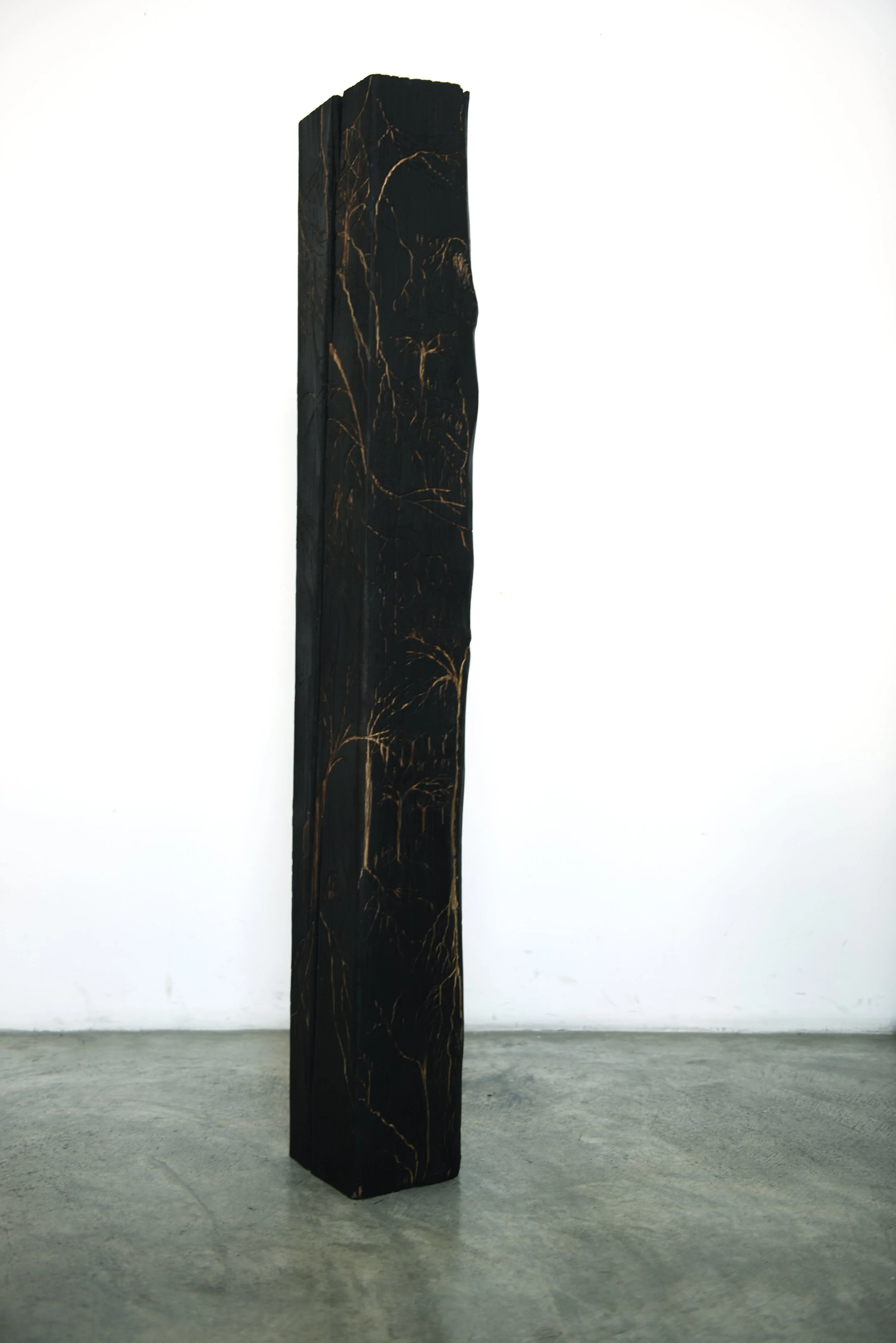
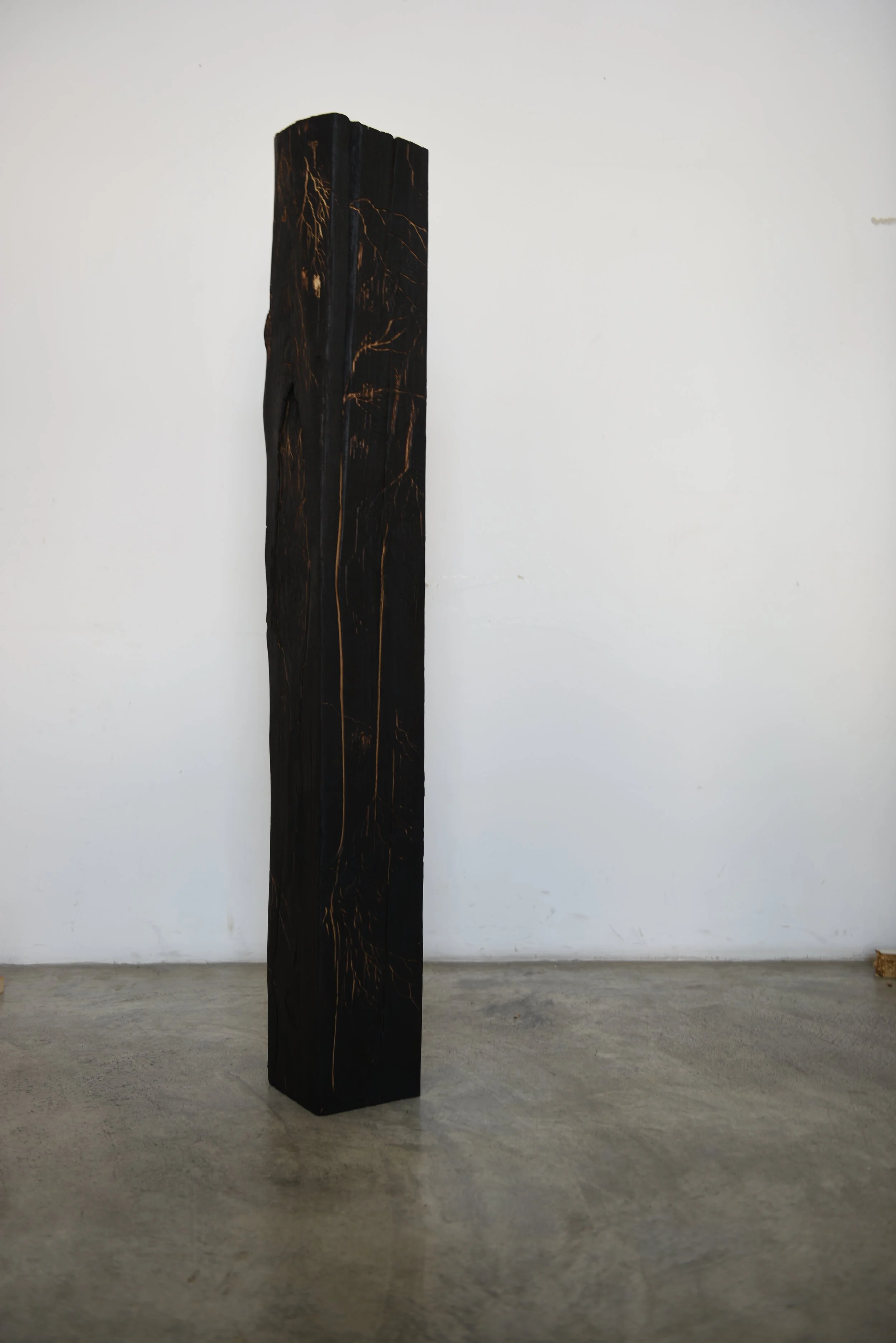
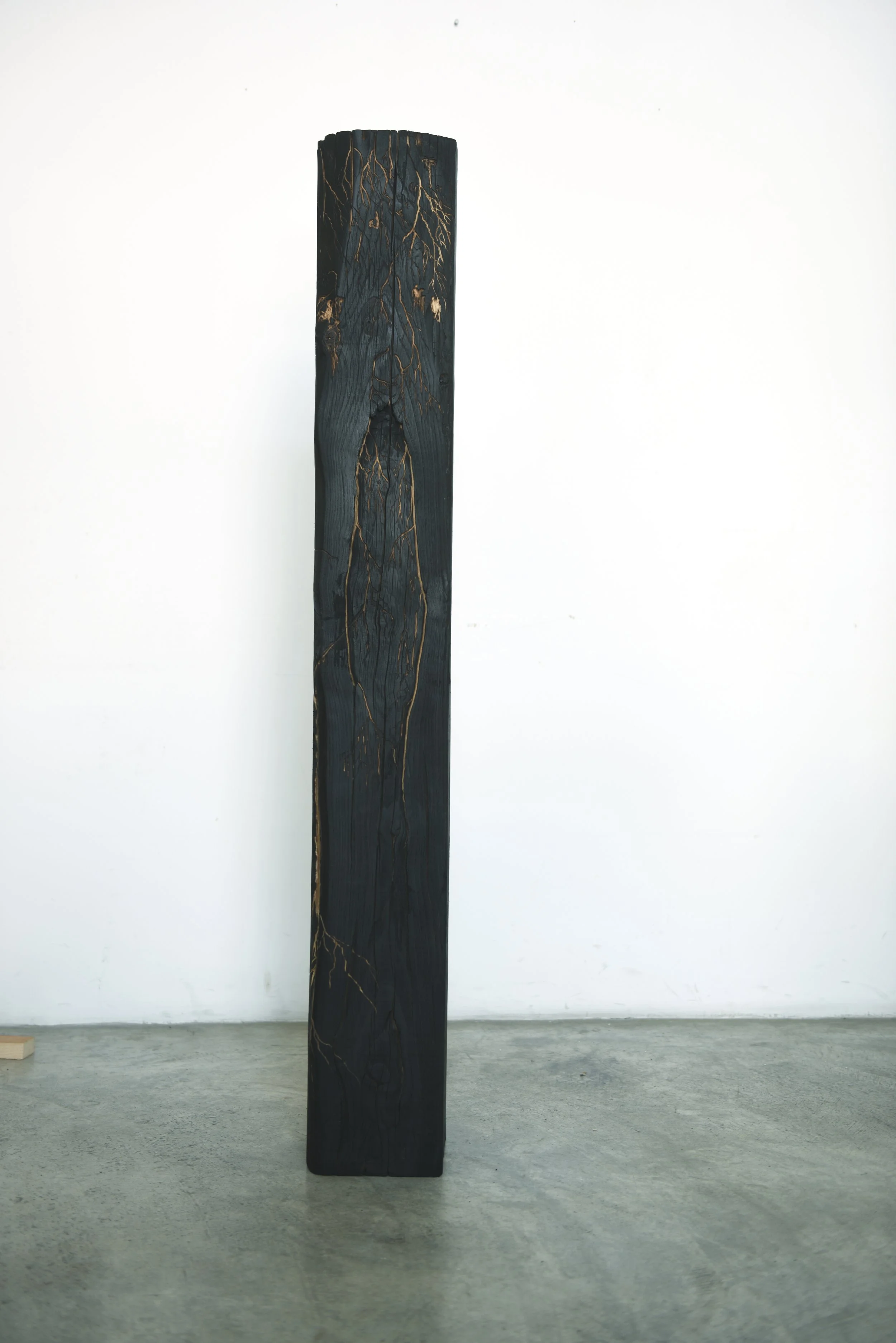
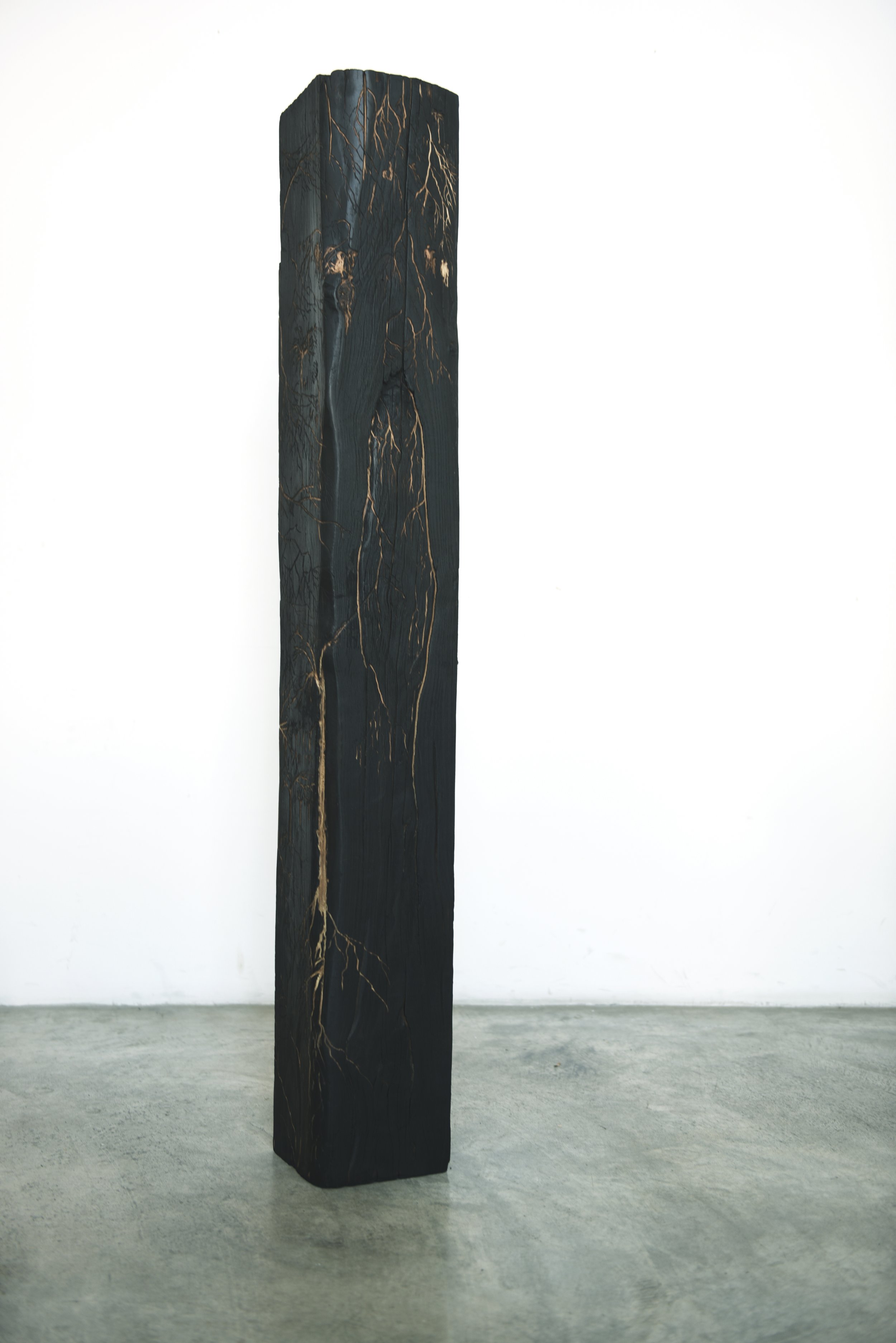
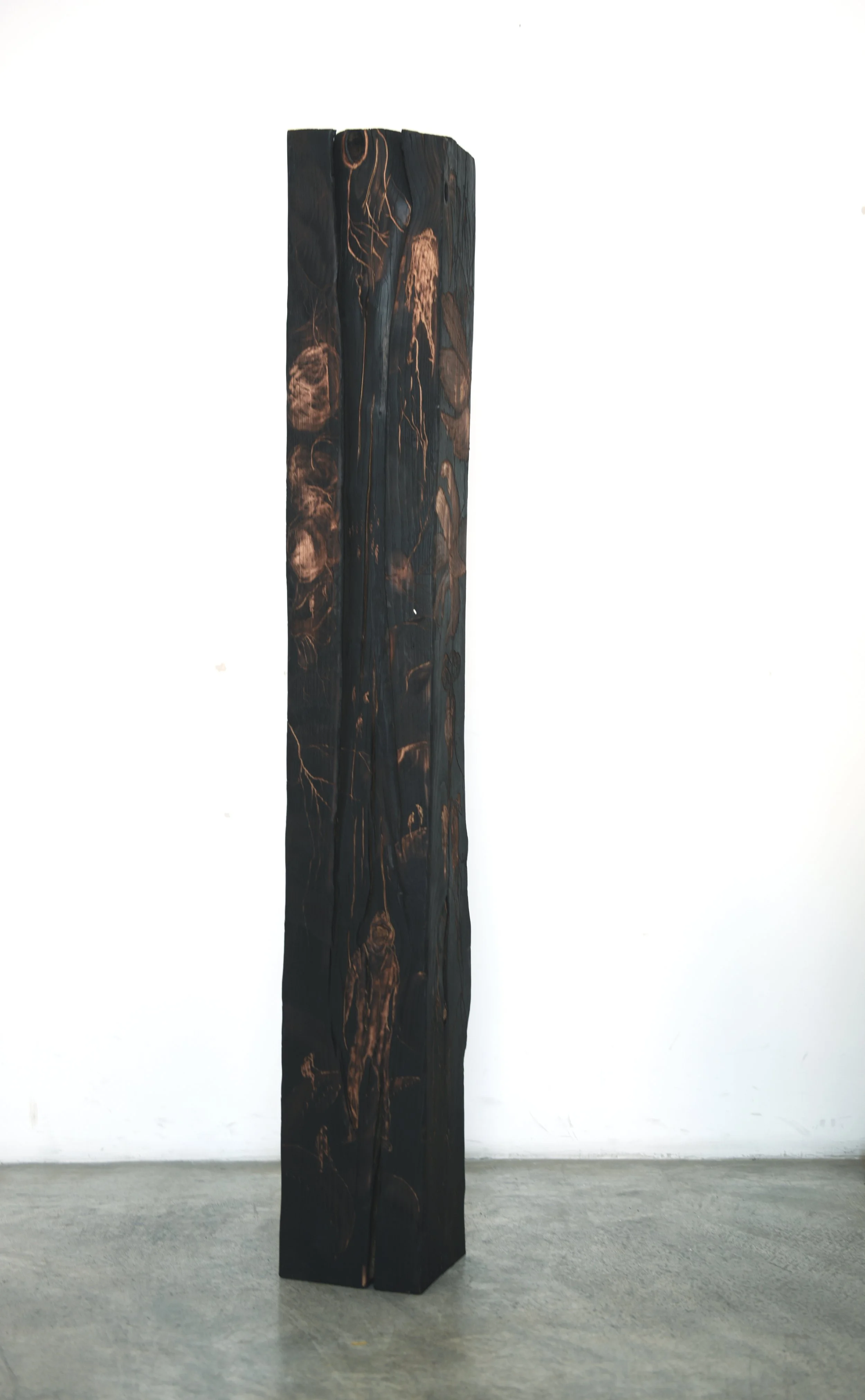
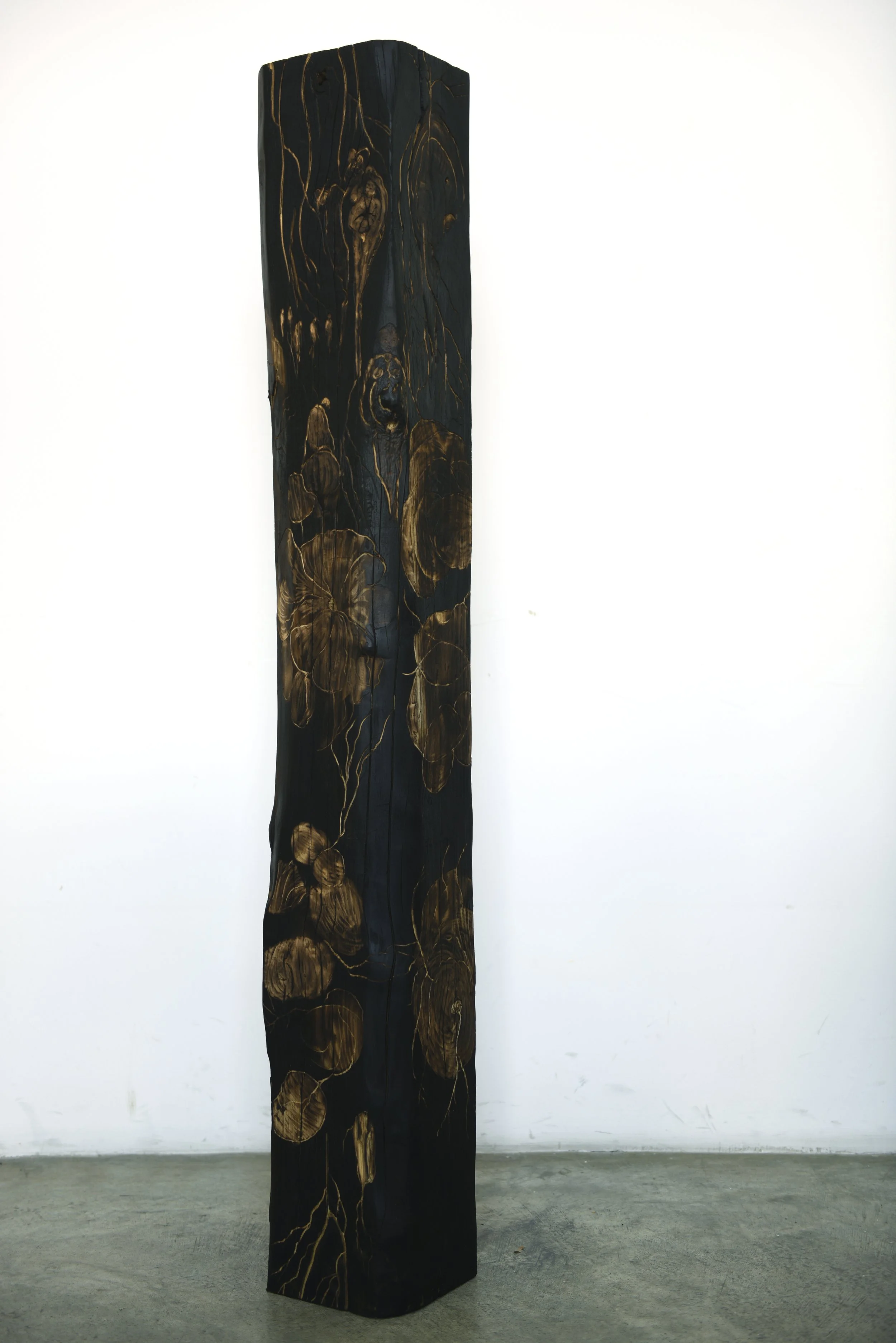
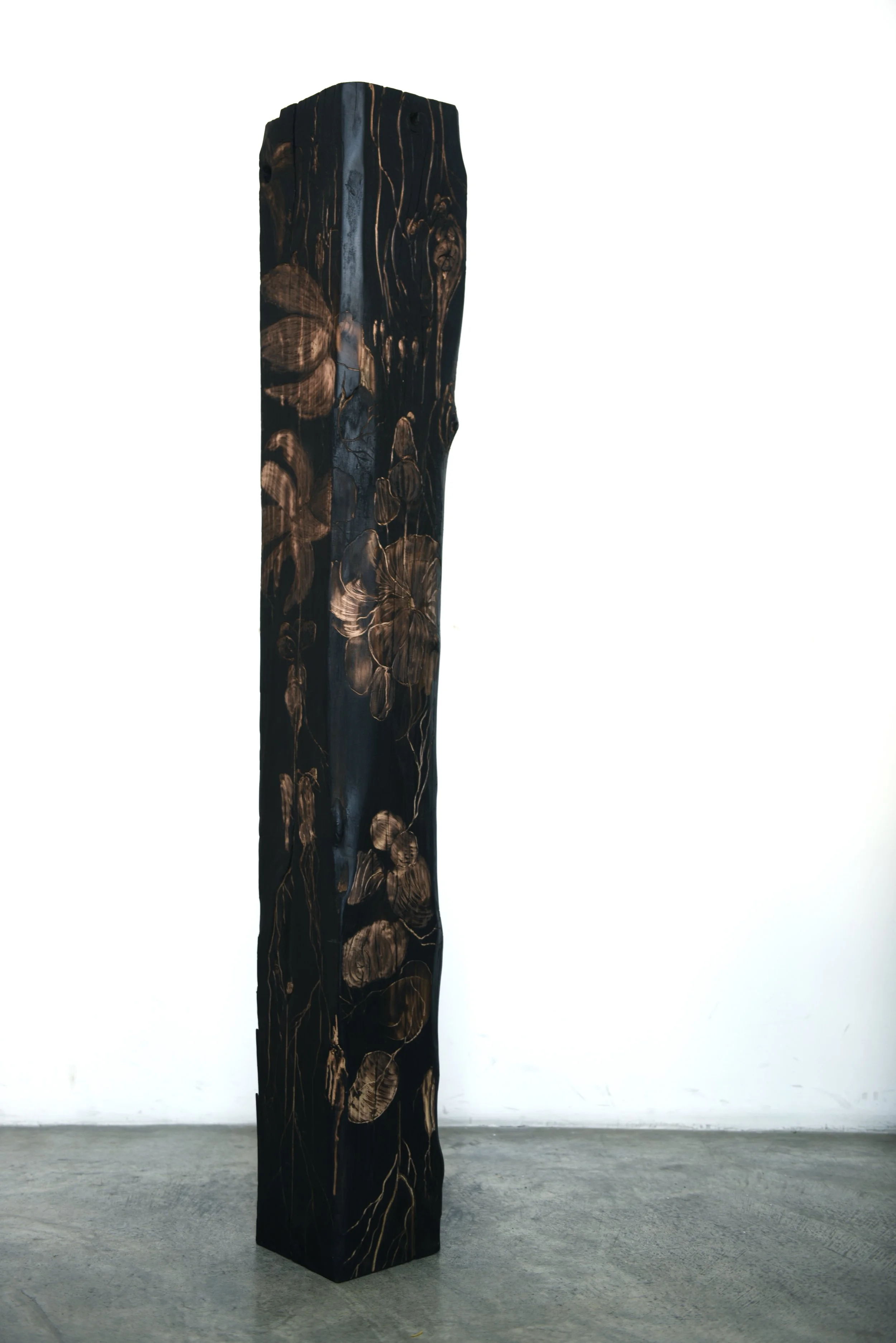
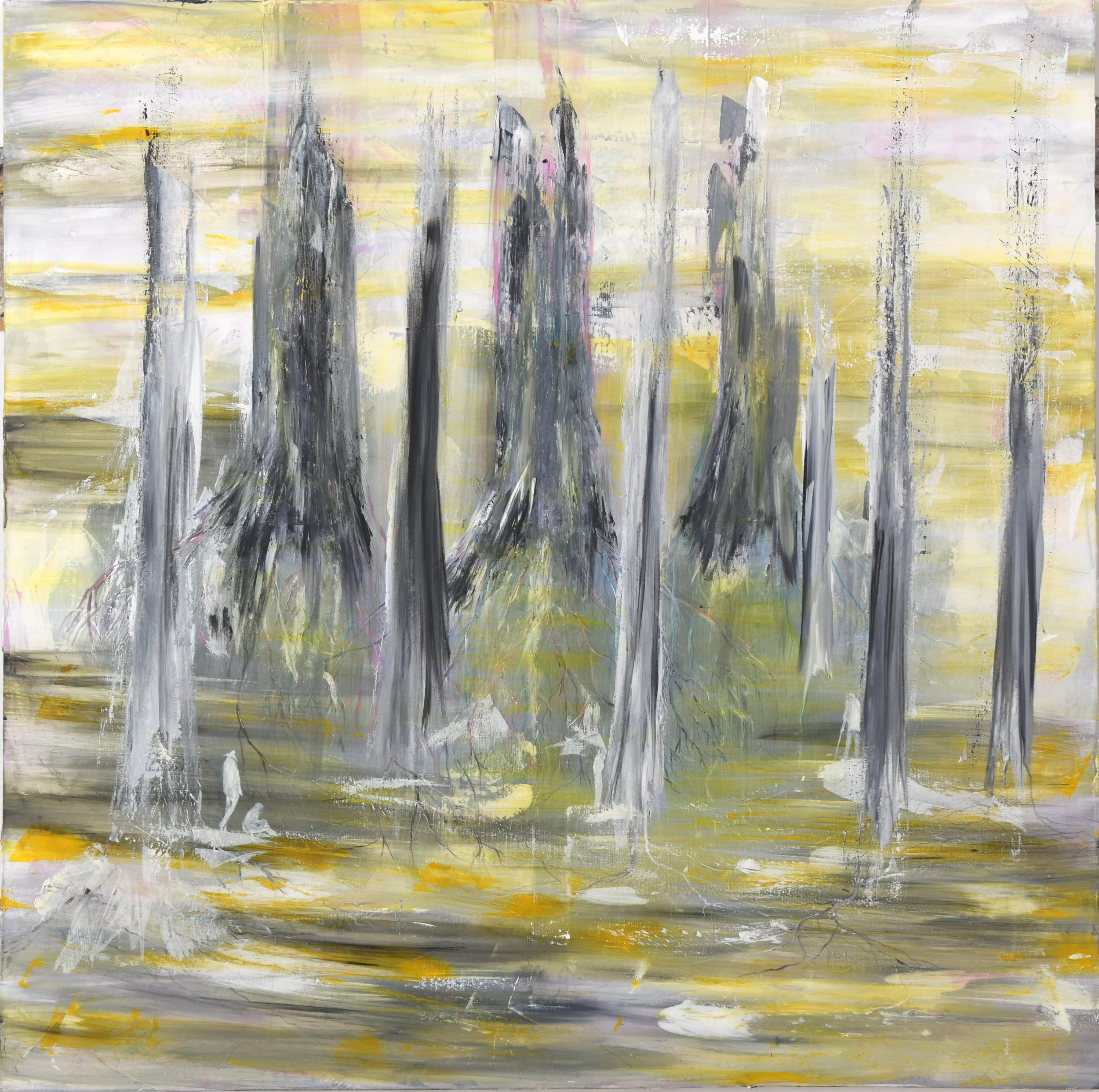
The sculptures are made from wood, a material that is never neutral. Each trunk carries the memory of the territory in which it grew, of climate, time and transformation. Their surfaces are charred using a traditional Japanese technique, placing the material in an ambiguous state between preservation and destruction, life and death.
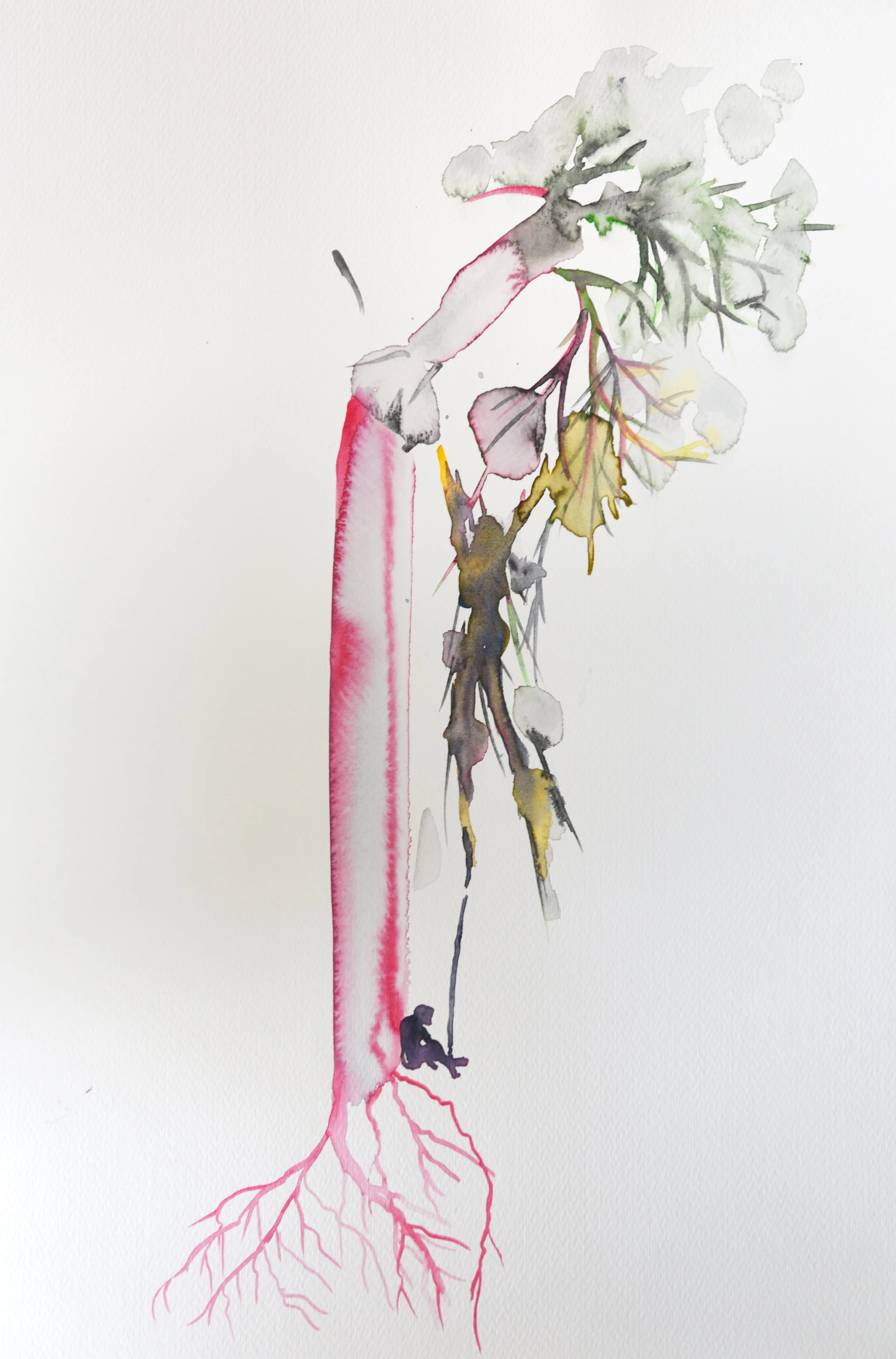
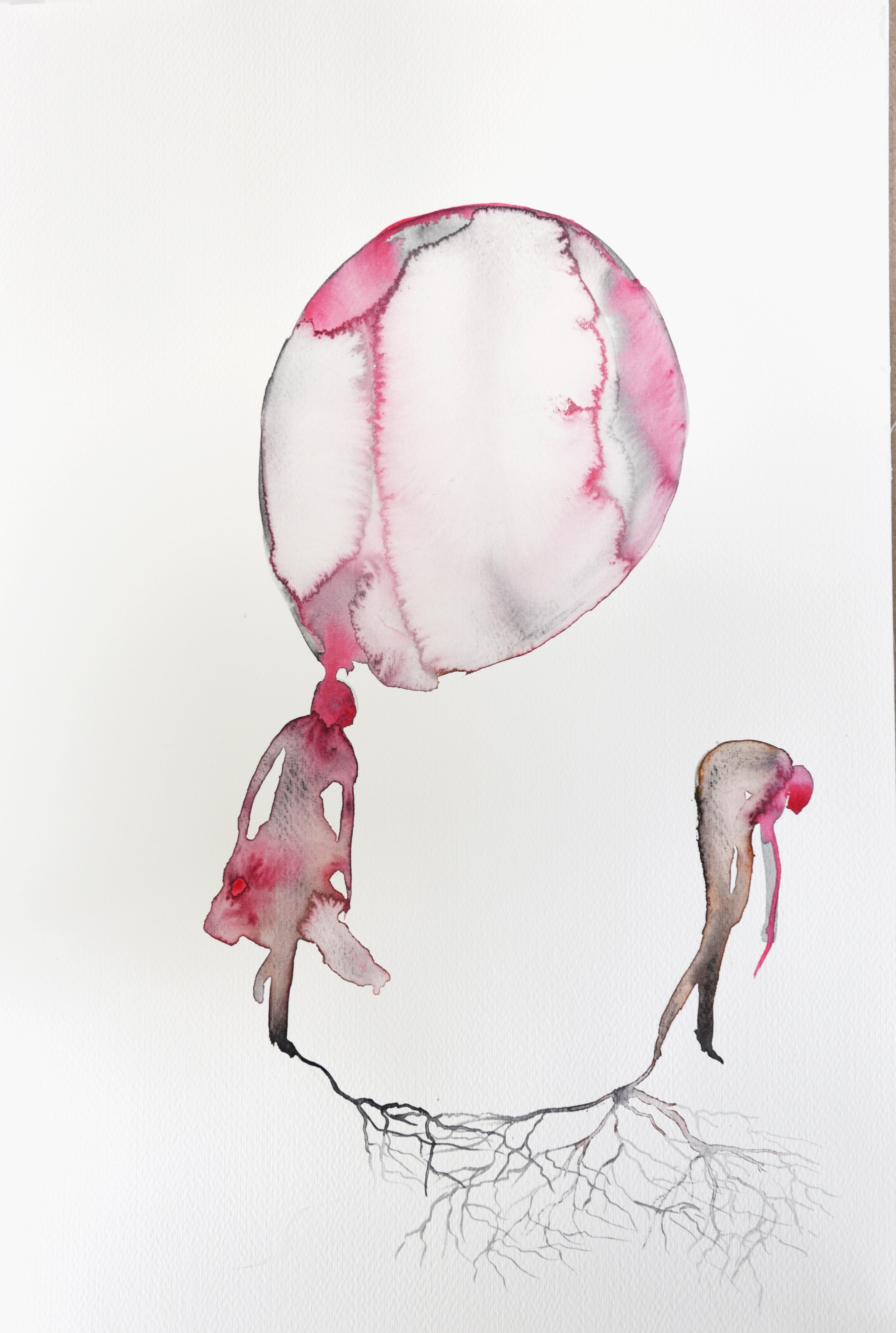
Within these blackened forests, roots remain deliberately visible. They become a metaphor for language and connection — underground structures through which living systems communicate, exchange and survive. From the wood emerge anthropomorphic, unstable figures: bodies caught in limbo, neither entirely human nor vegetal, inhabiting a world whose previous order is disappearing while another has yet to take form.
Sunset Boulevard questions the anthropocentric vision that accompanied the modern idea of progress: a world constructed around the human as its central measure, while neglecting the ecological systems upon which human existence itself depends.
Echoing Claude Lévi-Strauss’s critique of a civilisation increasingly detached from the structures of the living world, the series imagines a landscape after the promise of limitless expansion. The forest is no longer a backdrop to human history. It becomes an active presence. Roots, bodies and burned matter occupy the same territory.
The works exist at a threshold. The symbols of the past have lost part of their meaning; the forms of what might replace them have not yet appeared.
What remains is nature — not as a nostalgic return to an untouched world, but as the ground from which another relationship between human beings and the living world must be imagined.
Sunset Boulevard — Galleria Erica Ravenna, Rome, 2026.
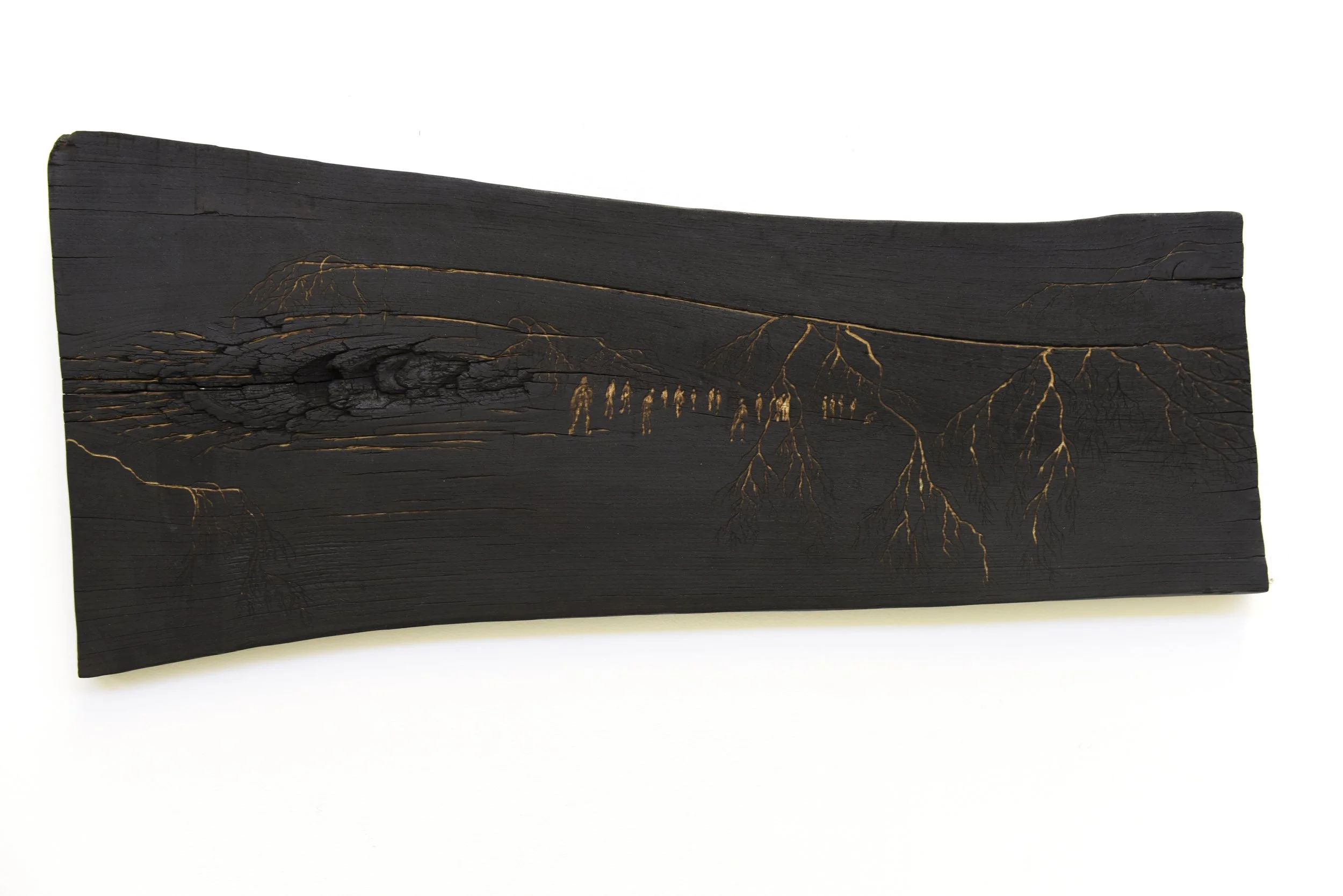
Sunset Boulevard, sculpture on burned wood, 2026




For info and sales please enquire directly HERE.