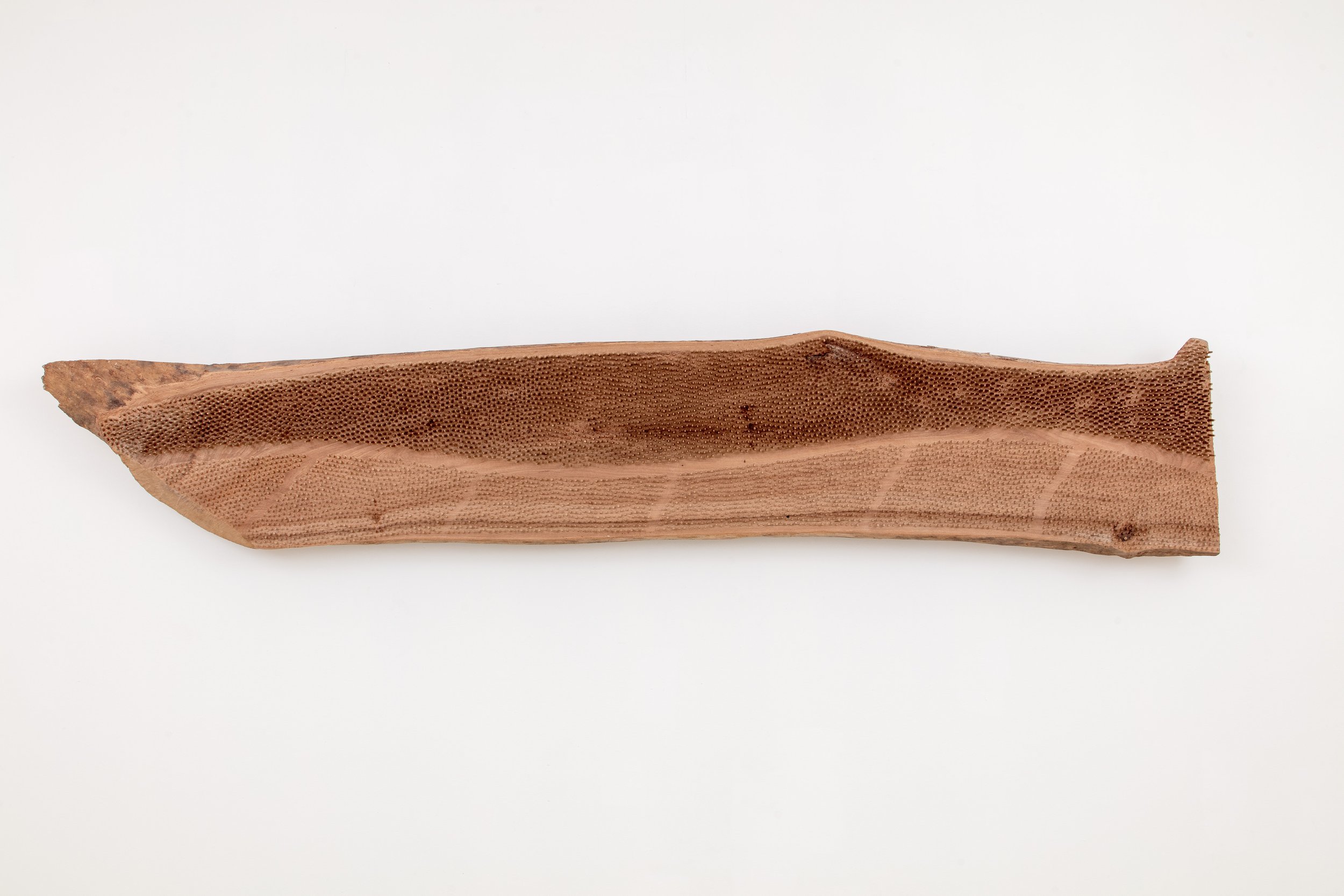
285cm
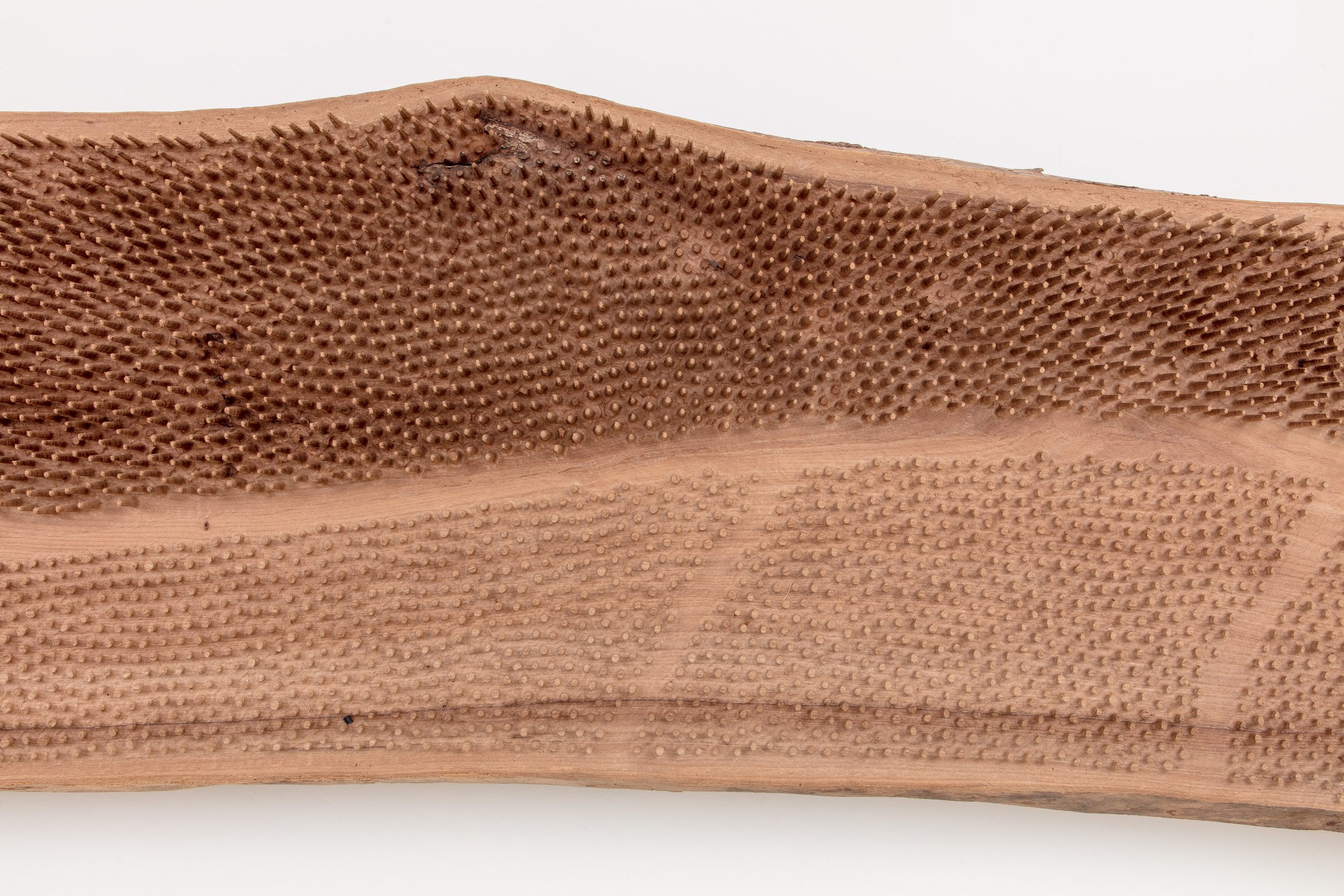


270cm

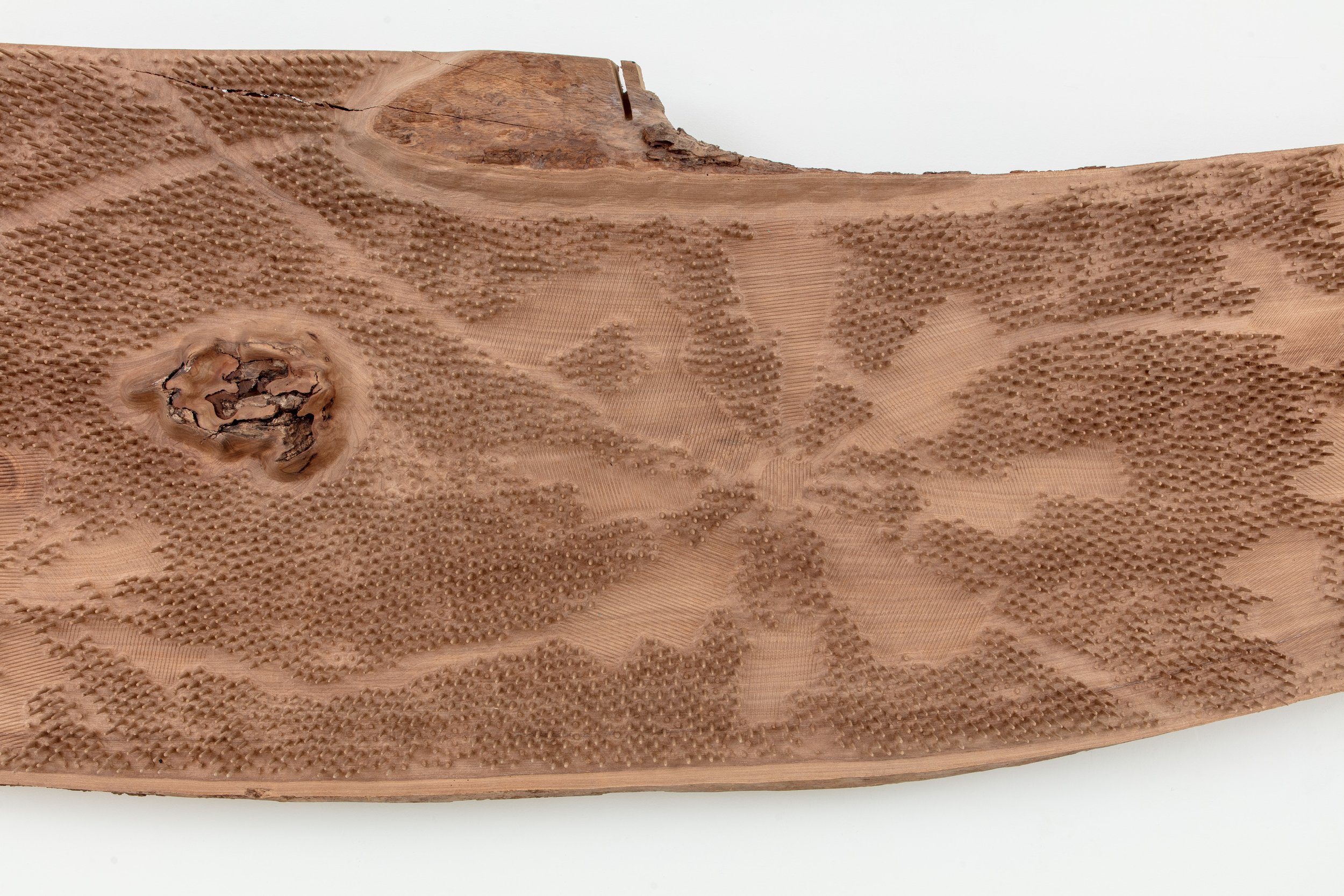

268cm


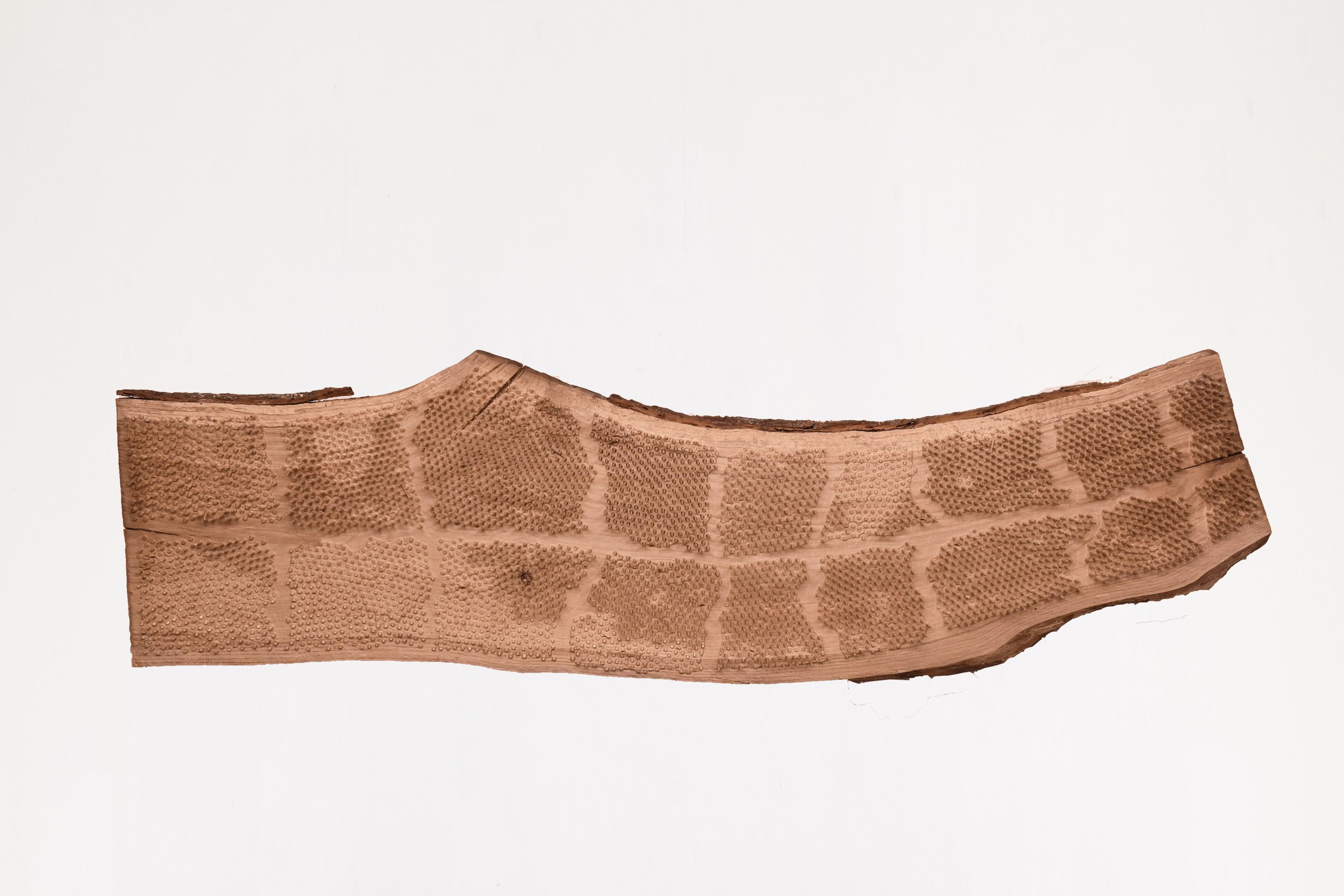
194cm
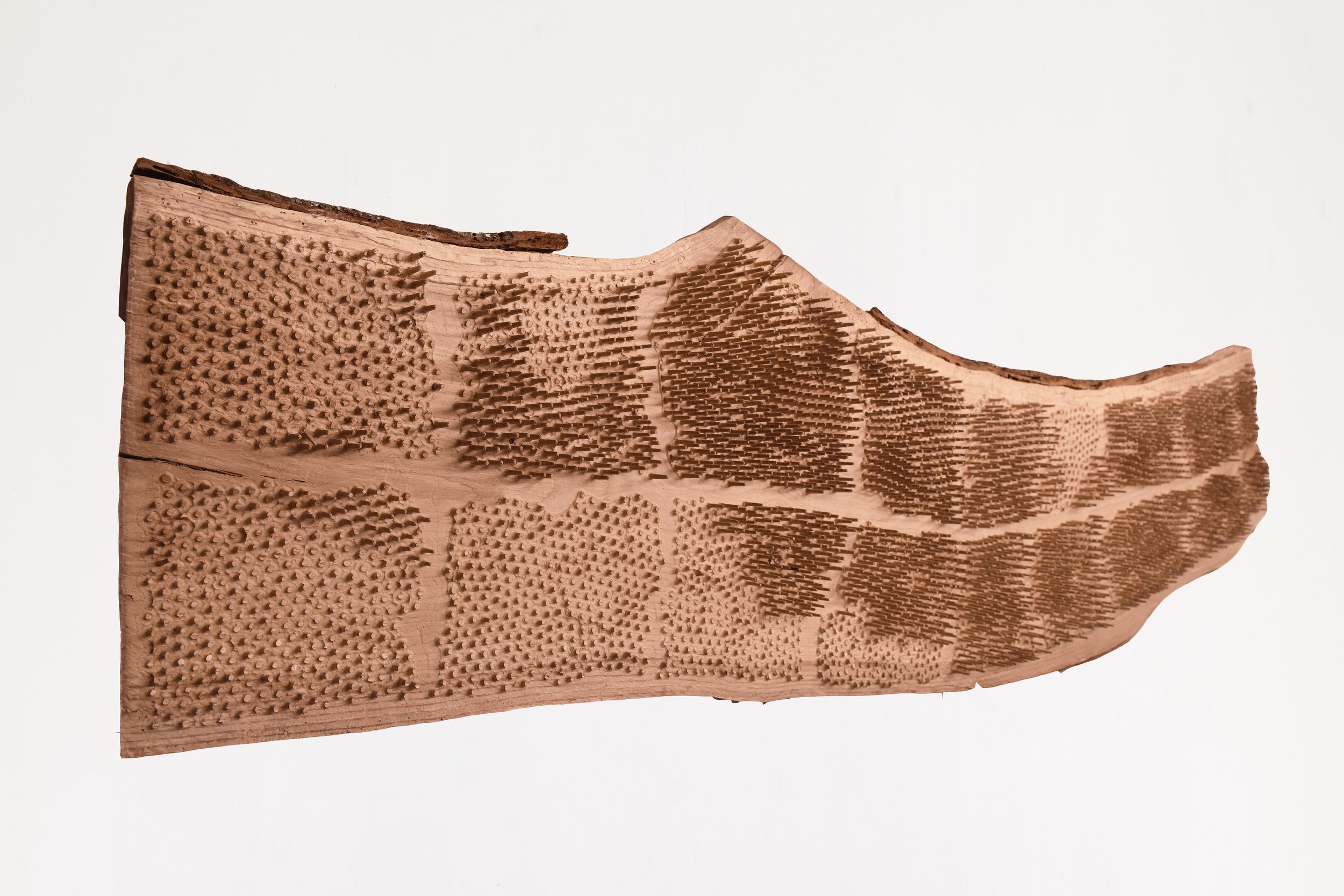
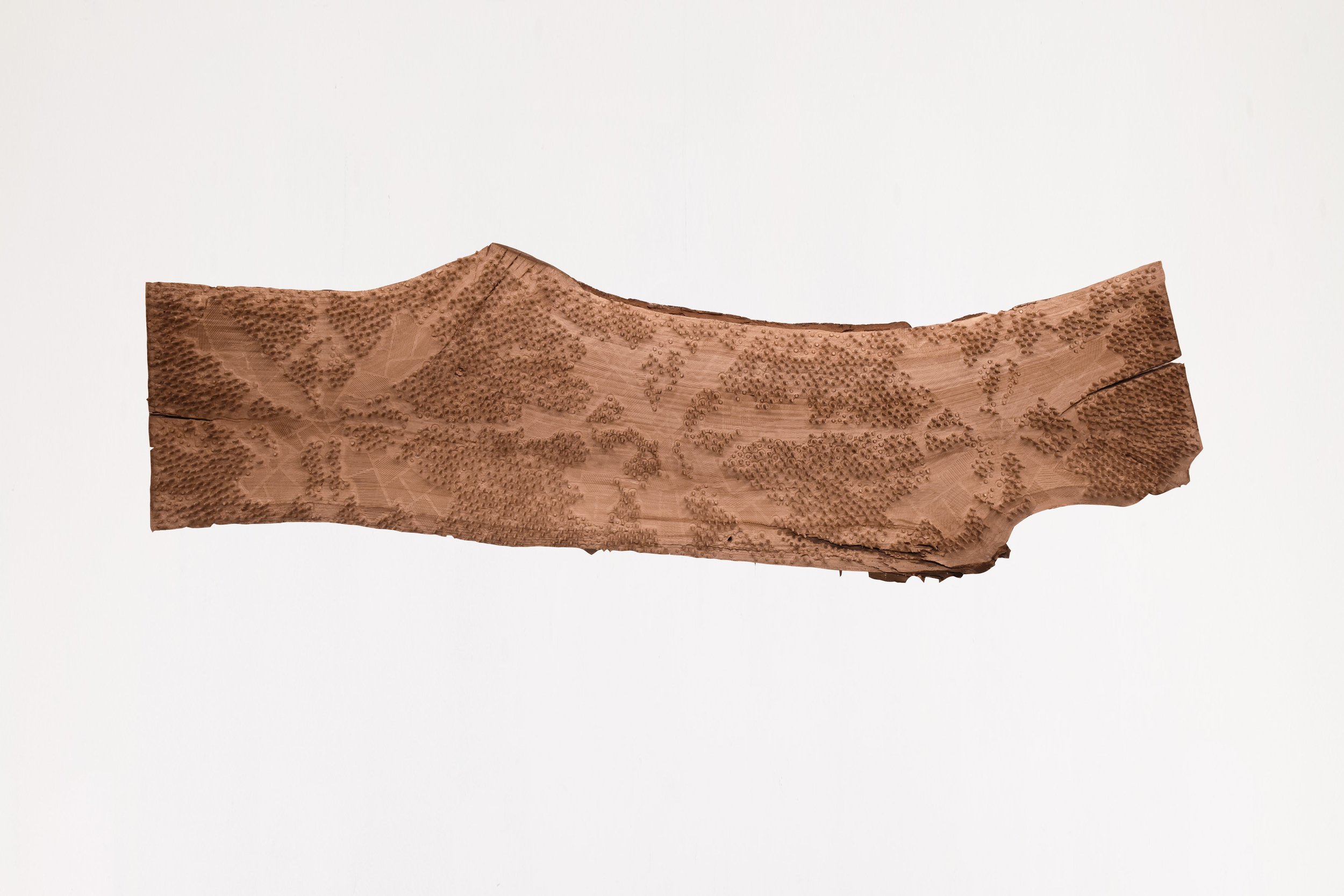
201cm
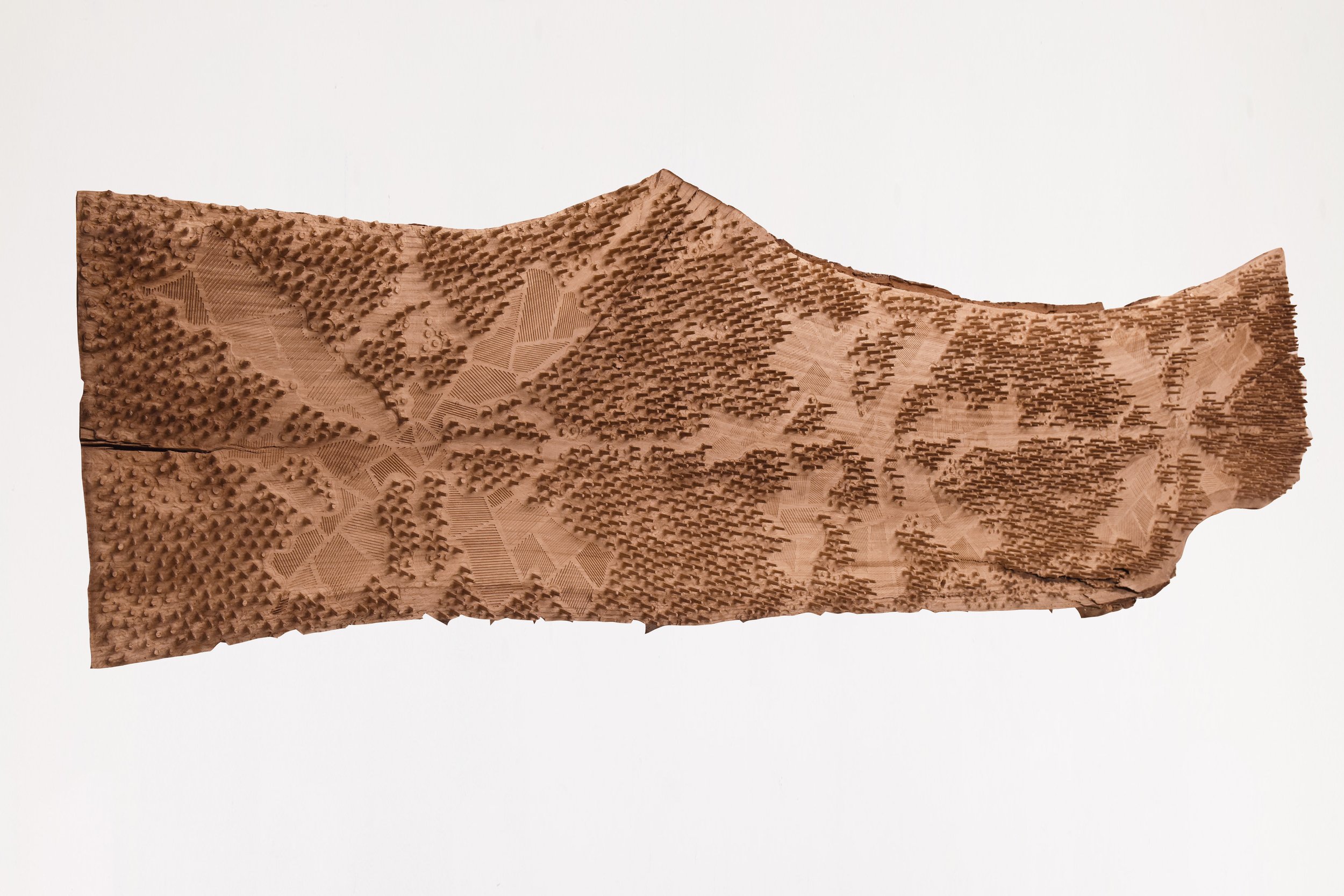

93cm

Primitive
Primitive begins with a paradox.
Observed from the distance of a satellite, the destruction of primary forests produces a recurring vocabulary of forms. Mining, logging, cattle ranching, soy and palm cultivation, roads and human settlements each inscribe particular geometries into the forest.
Lines, grids, ramifications, rectangles and expanding clearings reappear across territories thousands of kilometres apart. These patterns are not accidental. Their forms emerge from the function imposed upon the land. From above, the economic use of a territory becomes a drawing.
What appears almost abstract, sometimes strangely beautiful, is in reality the visible trace of disappearance.
Cyril de Commarque isolates these patterns and translates them into sculpture, carving them into trees felled by disease in the 1970s in the garden of his childhood. Images produced by satellites, observing distant territories at a planetary scale, encounter a material carrying an intimate memory. The planetary and the personal collapse into the same object.
The title Primitive deliberately holds two opposing meanings.
It evokes the primordial, the childhood of the world, a time before nature became landscape, resource or commodity. The primary forest is approached not as an untouched paradise, but as an extraordinary architecture of relationships, between trees, fungi, soils, water, stones, animals and climate. A collective organism in which every element, visible or invisible, participates in the conditions of life.
But primitive also describes the persistence of another condition. Behind the technological complexity of satellites, global markets and industrial extraction remains an elementary logic, to occupy, divide, extract and transform the living world into resources.
The same civilisation capable of observing the Earth with unprecedented precision continues to reproduce remarkably similar patterns of destruction upon its surface.
This contradiction extends into the making of the works.
An industrial Kuka robot first carves approximately sixty percent of each sculpture. Satellite imagery and digital information become coordinates, then movement, then physical incisions into wood. De Commarque subsequently takes over, completing the work by hand. The gesture becomes slower, physical and uncertain. Body, machine and matter enter into negotiation.
Technology is therefore present twice, first as the instrument through which the transformation of the Earth becomes visible, then as the instrument through which that transformation is translated into sculpture.
Neither technology nor nature is presented as the answer. Their confrontation reflects the threshold we inhabit, a moment when our capacity to measure, map and transform the planet has become immense, while our dependence upon the fundamental structures of the living world remains unchanged.
Primitive asks what progress might mean when the most technologically advanced civilisation in history continues to depend upon relationships infinitely older than itself.
Perhaps the primitive is not behind us.
Perhaps it is what we have yet to understand.
Primitive was exposed at:
Palazzo Esposizioni Roma 2024/5 (solo show)
Royal Academy of Art, London 2021 (group show
Saatchi Gallery, London 2019/20, solo show.
For info and sales please enquire directly HERE.