API-LOGO
MUSEO ORTO BOTANICO ROMA
A work created with the living, not merely placed among it.
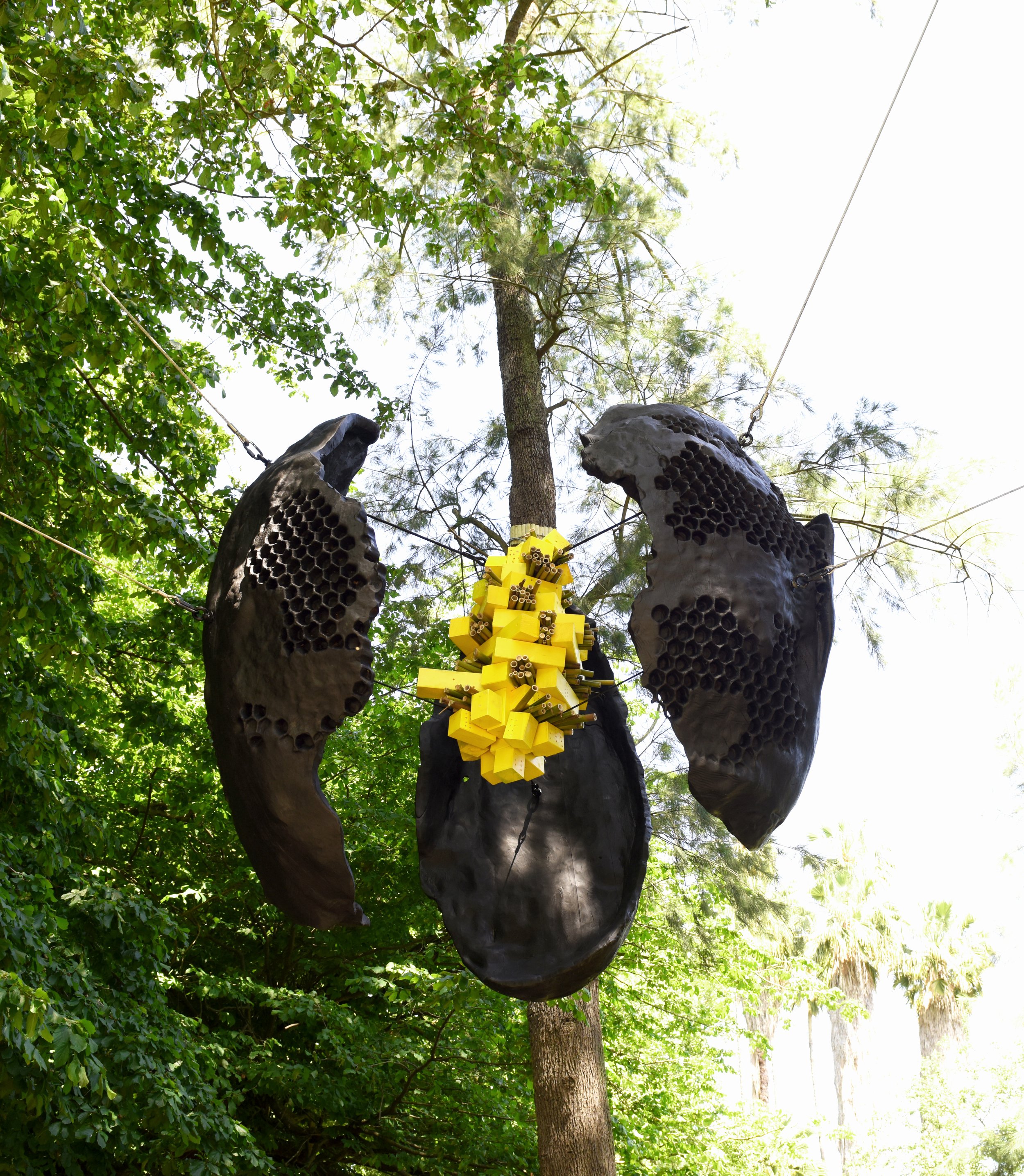
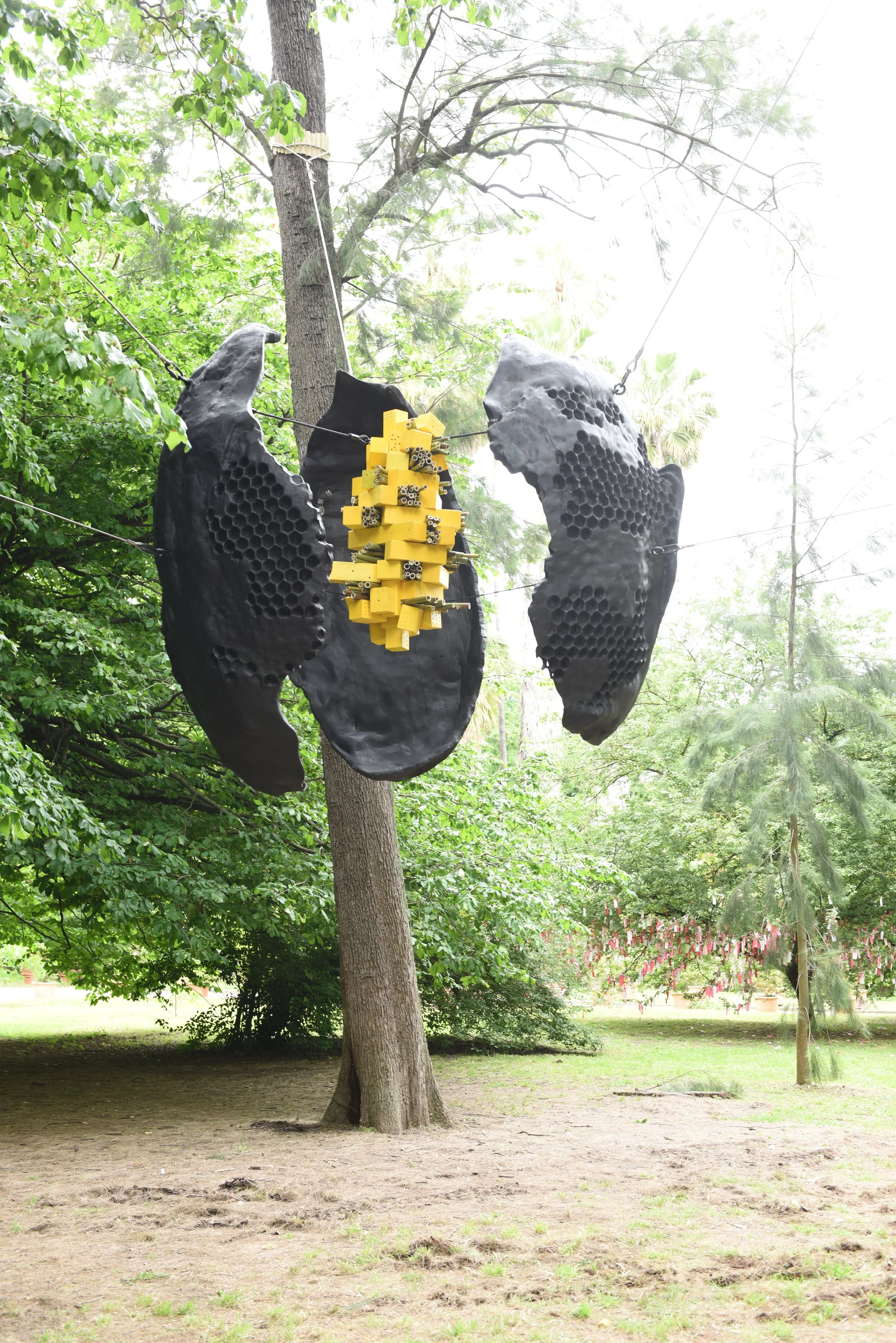
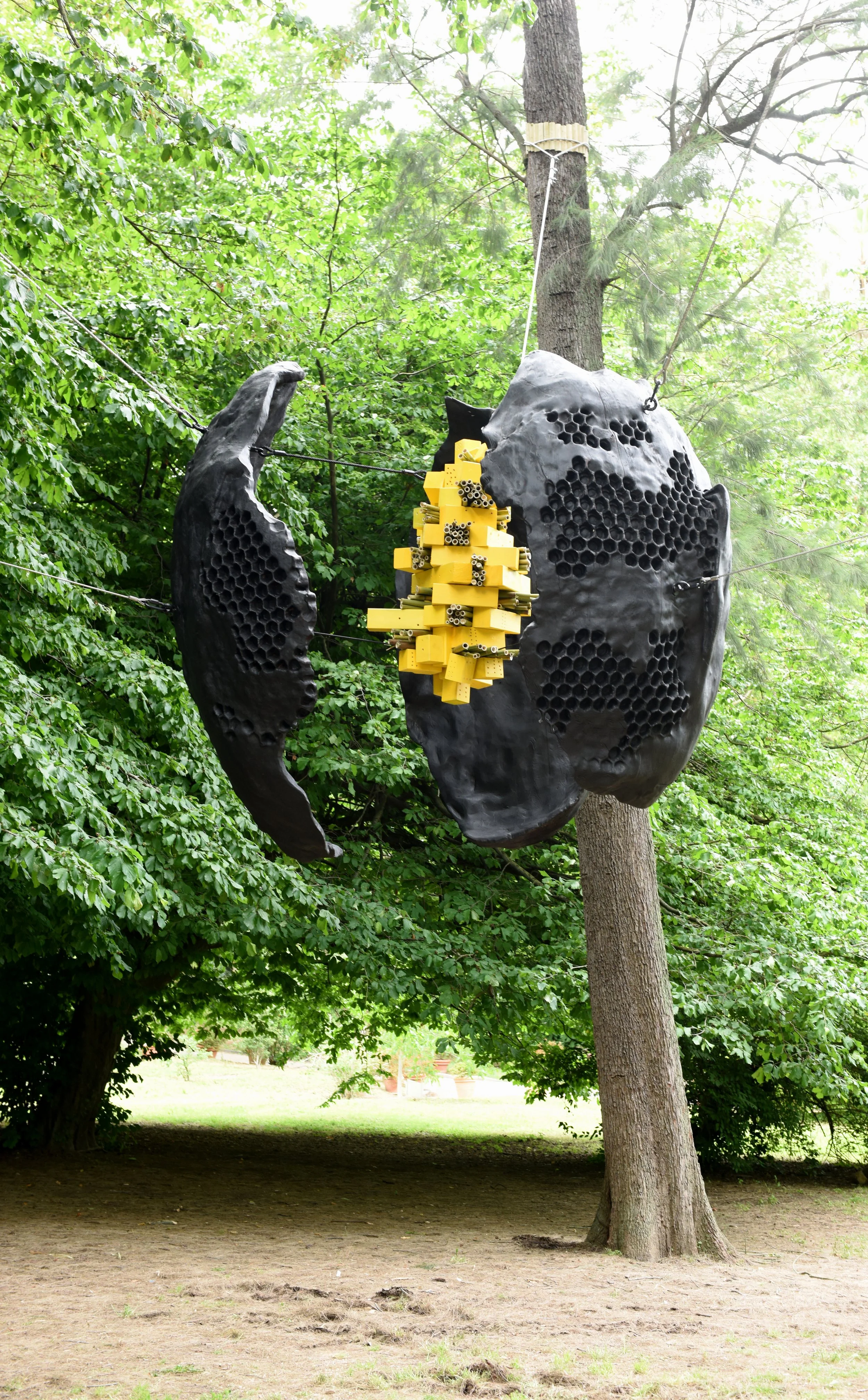
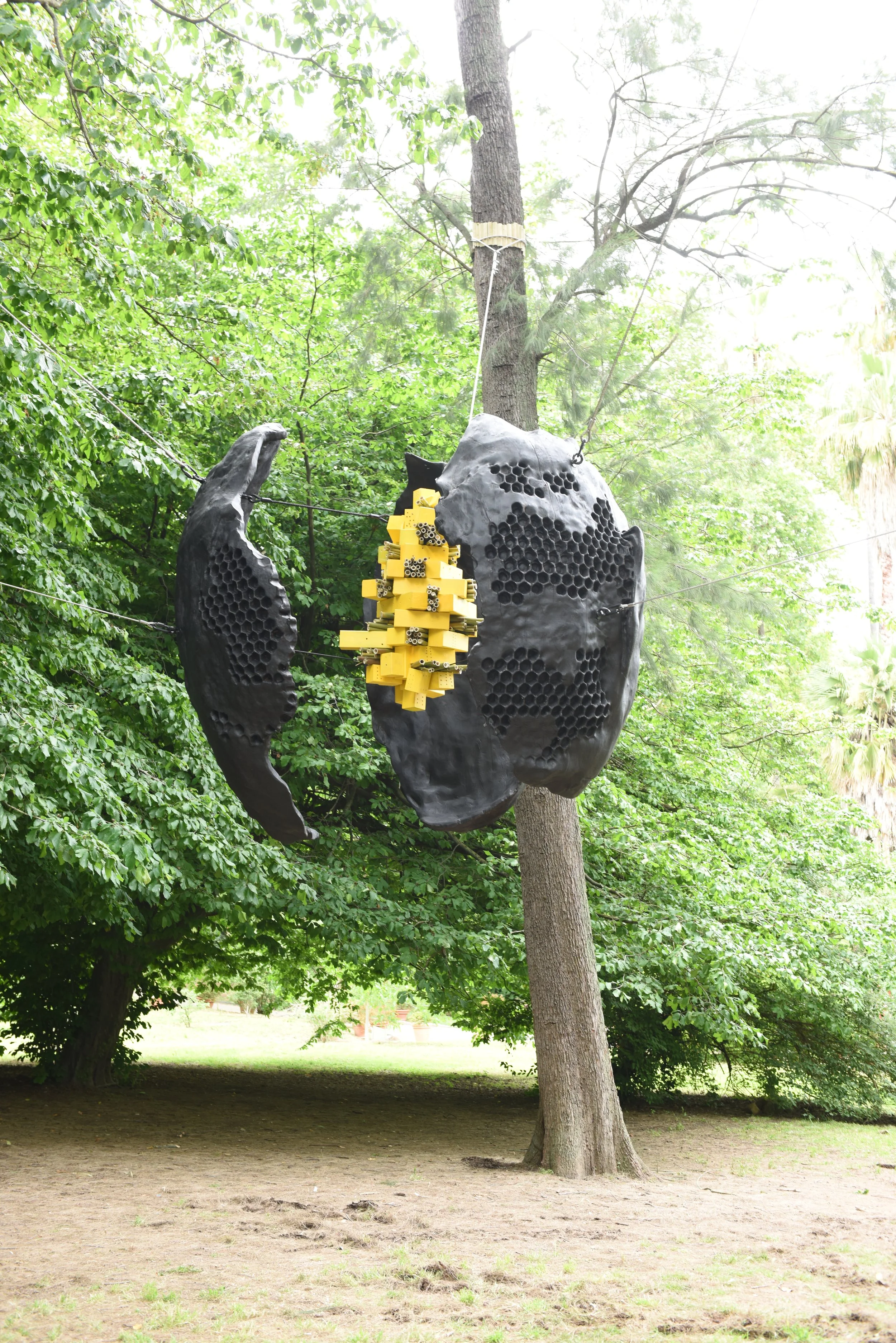
Here, the living is not represented: it inhabits the work, moves through it, alters it, makes it unstable. The sculpture ceases to be an object and becomes a place, built on two convictions: that the planet is a living organism, and that human history cannot be separated from its relationship to the ecosystems that sustain it. Its blackened wood carries the trace of the Anthropocene, combustion, consumption, exploitation, yet the work does not propose a romantic reconciliation between humans and nature. It asks instead whether coexistence is possible, opening a phase of observation and listening, in which the bees' movements, vibrations and dances are approached as a highly structured, non-verbal form of collective intelligence.
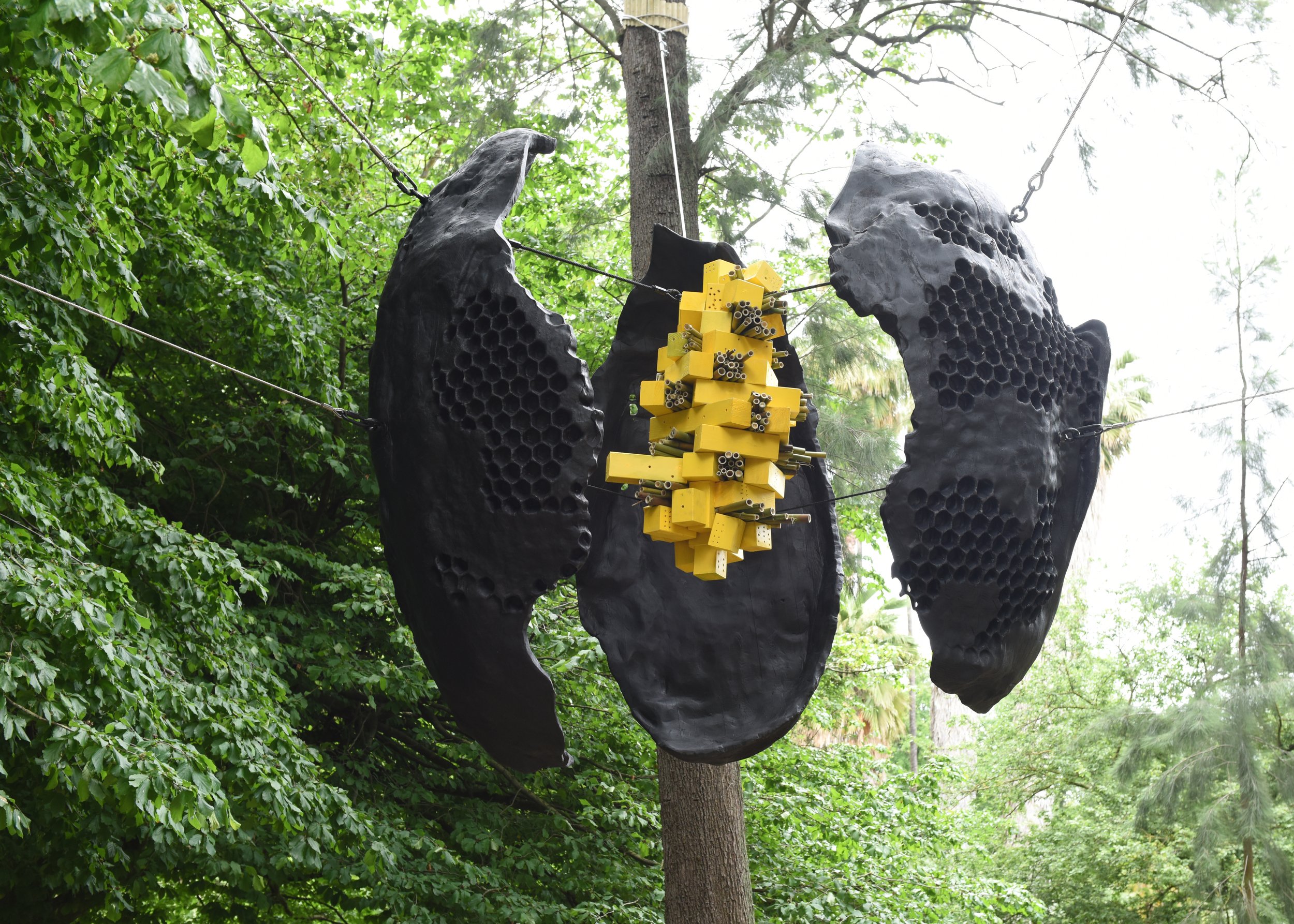
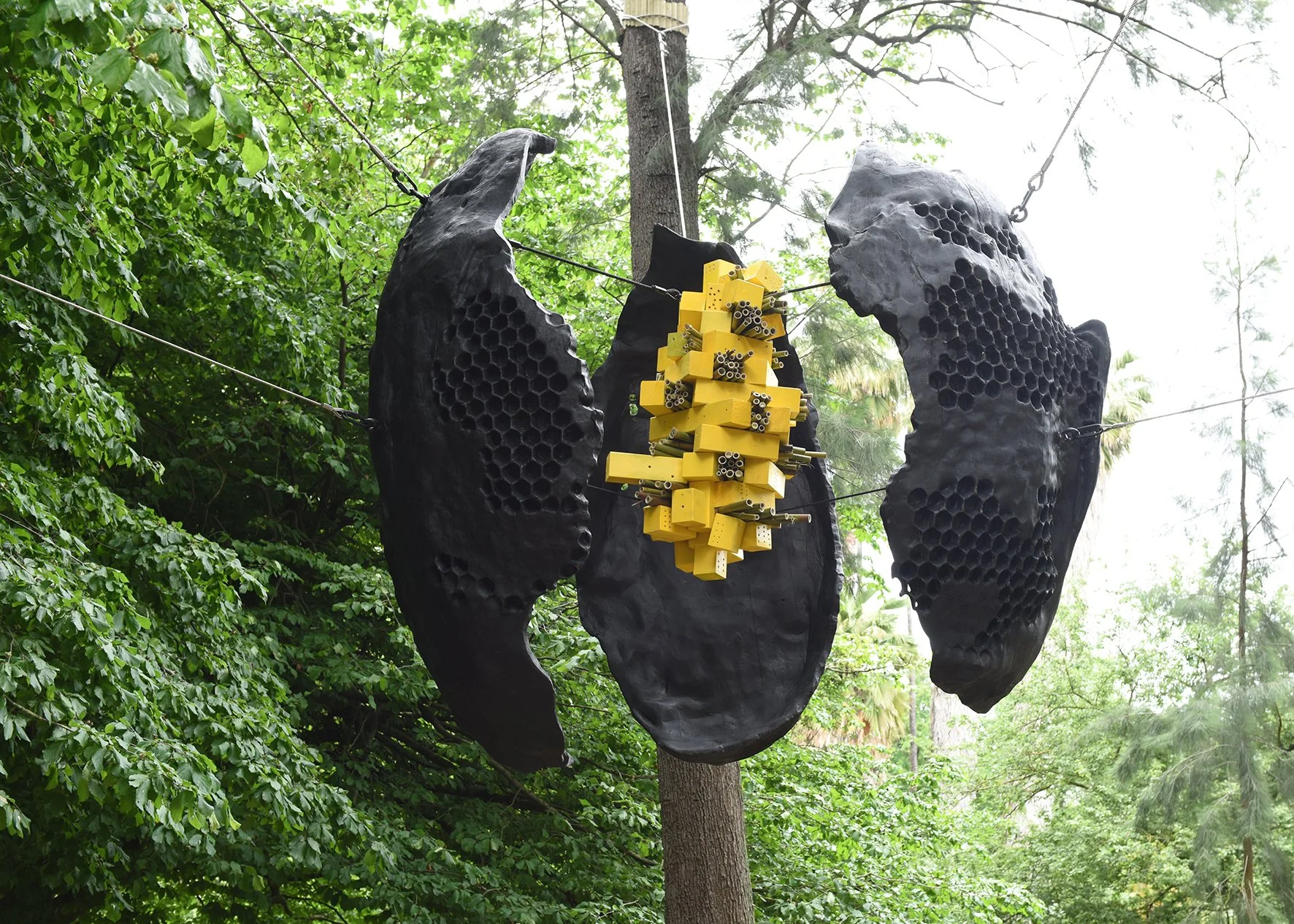
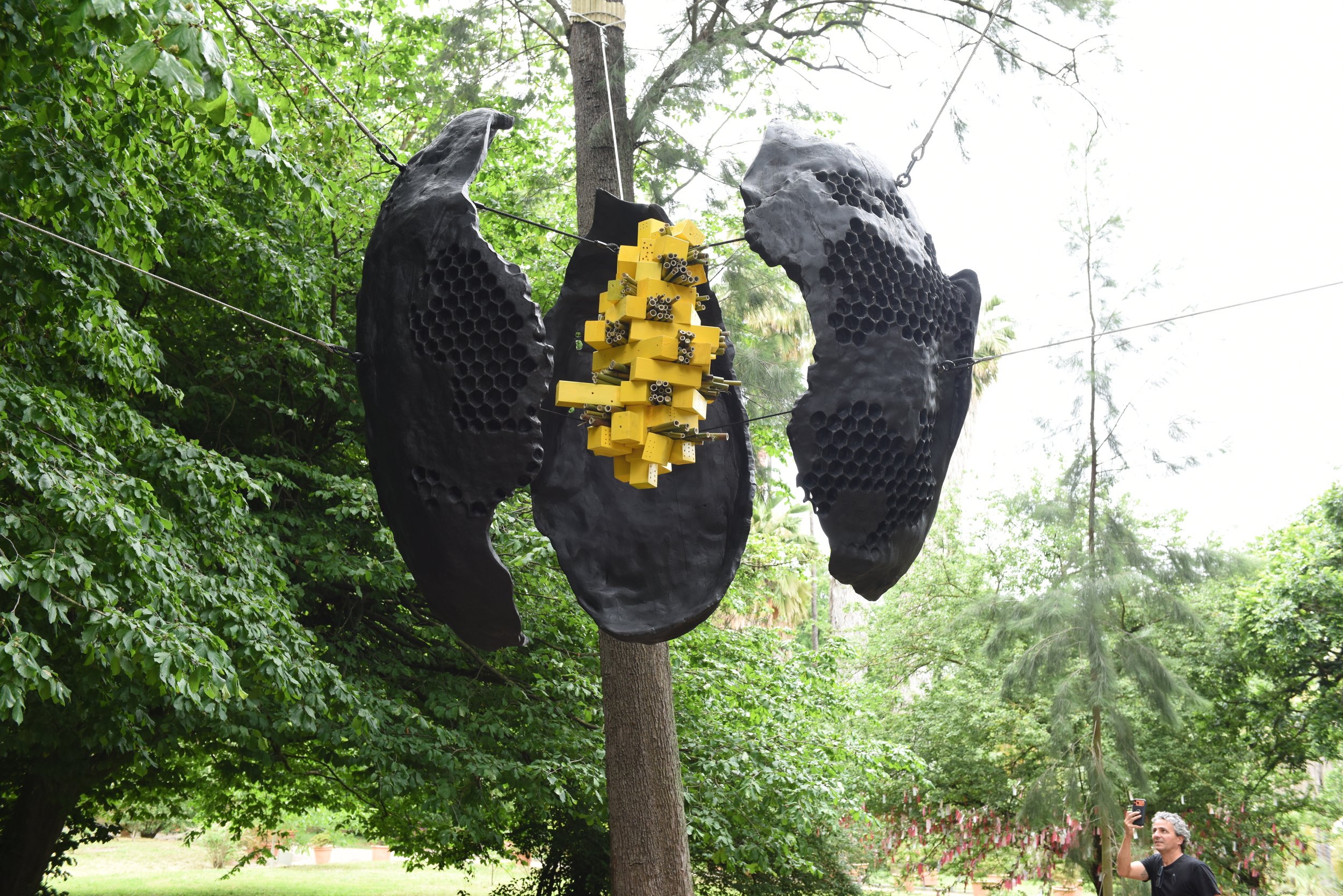
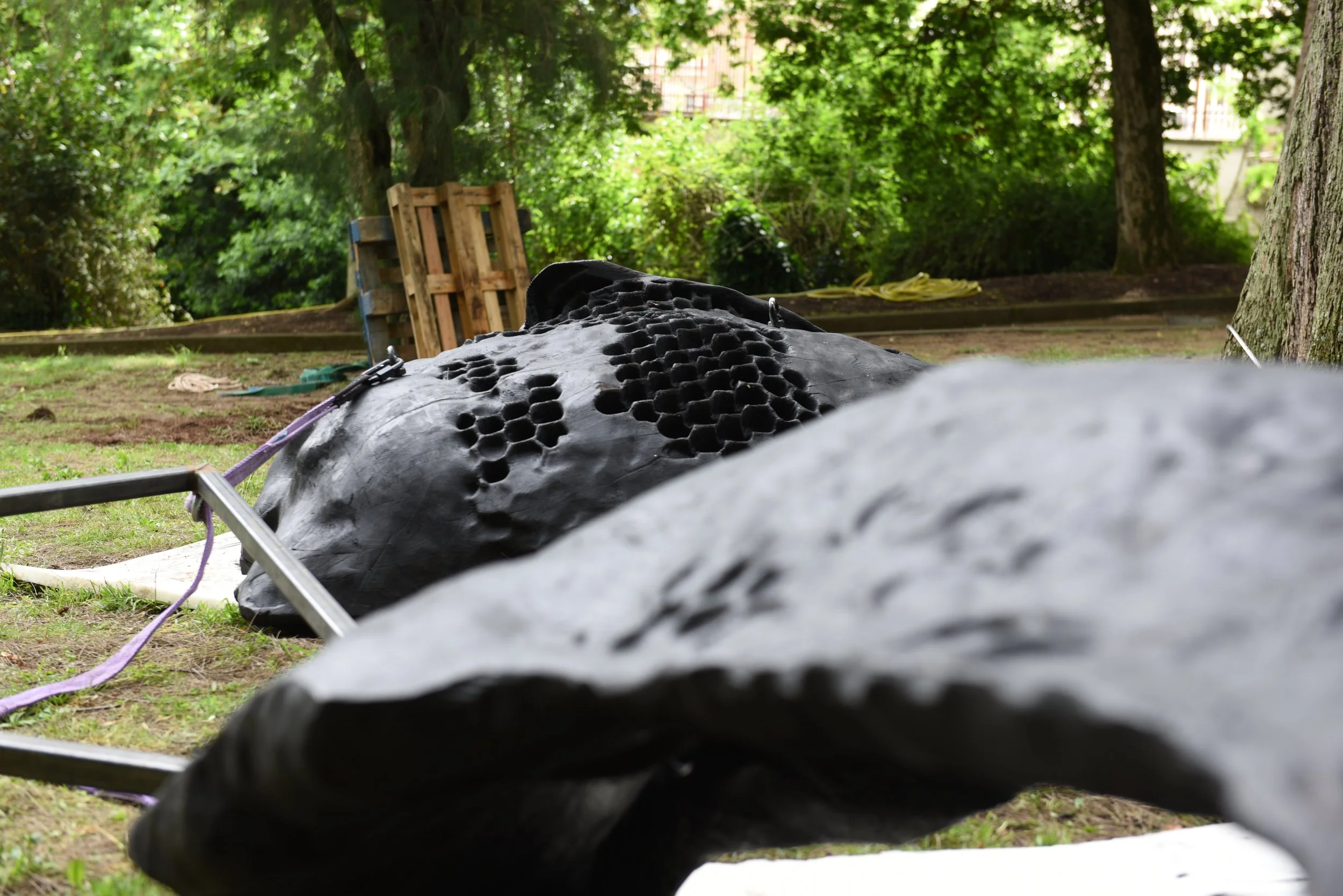
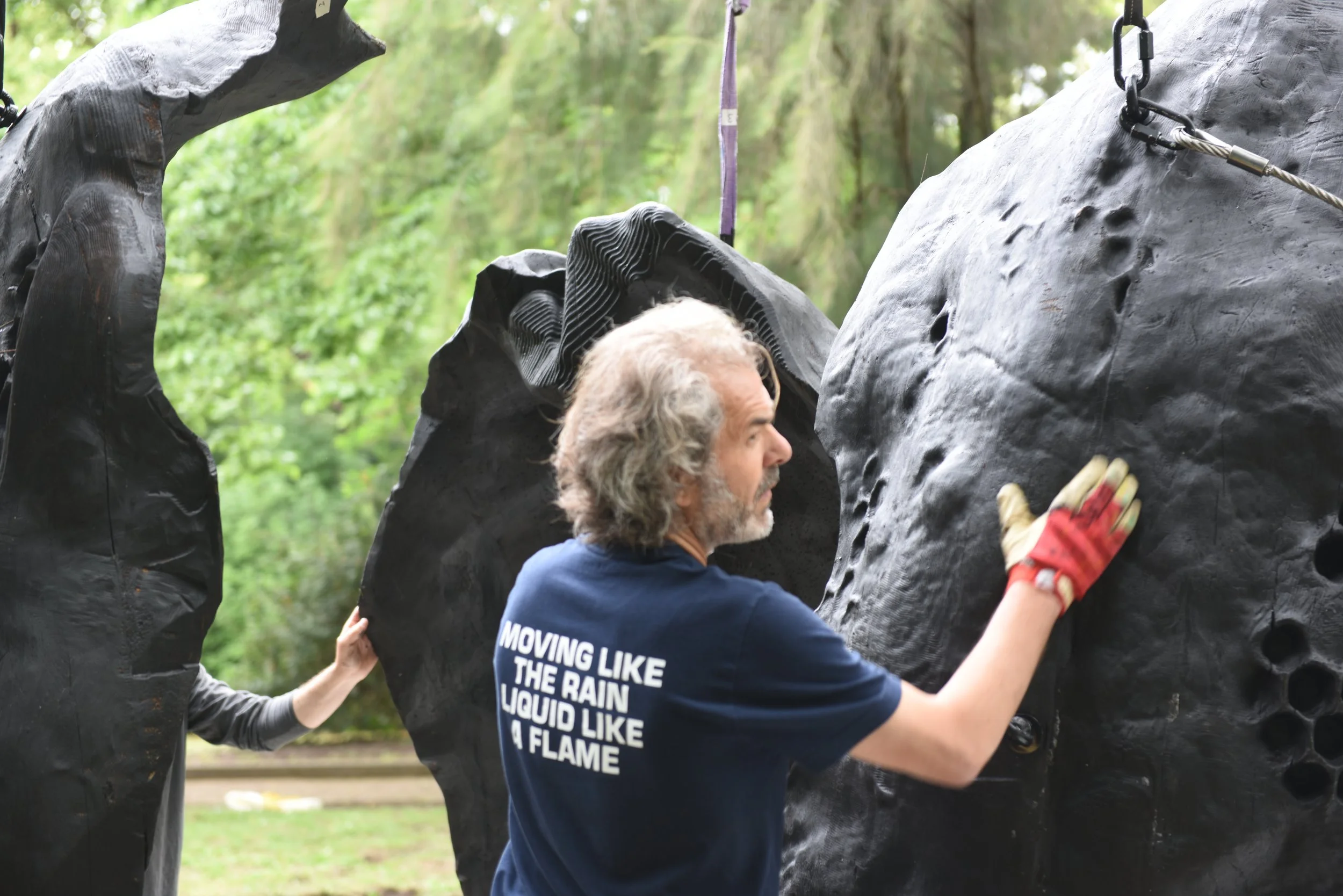
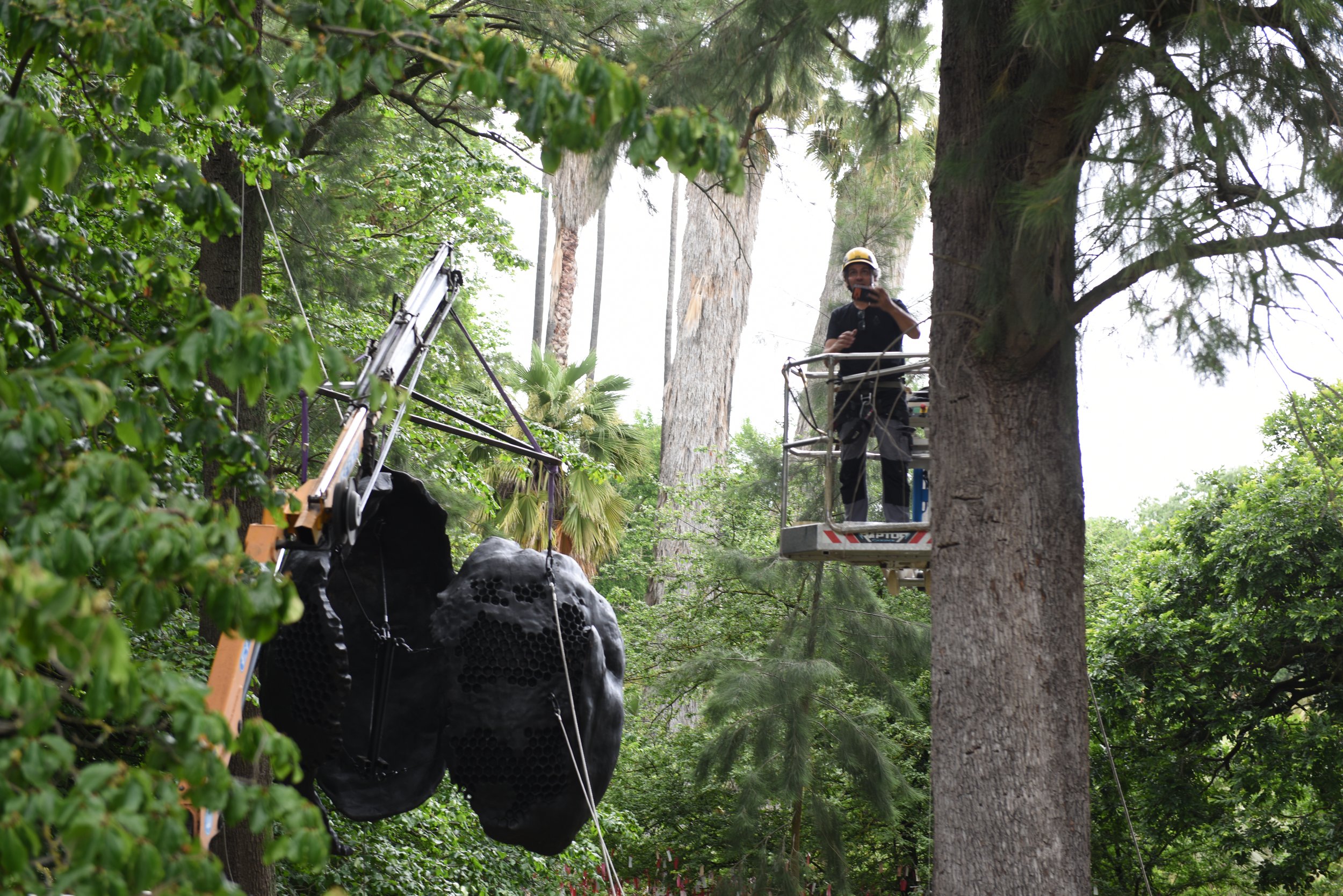
API-LOGO, its title a contraction of the Italian api (bees) and epilogo (epilogue), is a 260 cm figure of Apollo, permanently installed at the Orto Botanico di Roma (Sapienza Università) since May 2026, suspended between three trees. Carved in wood and burned using the Japanese shou sugi ban technique, its outer skin evokes an open nest, fragmented into three irregular parts, like the remains of a structure in explosion, its surface deep, black and vibrant, a memory of fire and a trace of transformation. Inside, the three elements are carved into a succession of honeycomb cells, echoing the organic, structural and fragile perfection of the bees' hive. At its heart, an invisible metal structure is concealed by a multitude of bamboo canes, inspired by Yona Friedman's "favela des abeilles," forming a modular habitat for wild bees that can be renewed each year.
Installed at the heart of the garden, the work invites reflection on the links between art, ecology and biodiversity, and on the essential role wild bees play in the balance of ecosystems. The sculpture becomes a threshold between the human and the more-than-human, a classical figure inhabited, in real time, by a living colony, as the piece stands in the garden.
API-LOGO is permanently installed at the Museo Orto Botanico di Roma, Sapienza Università di Roma, since MAY 2026.
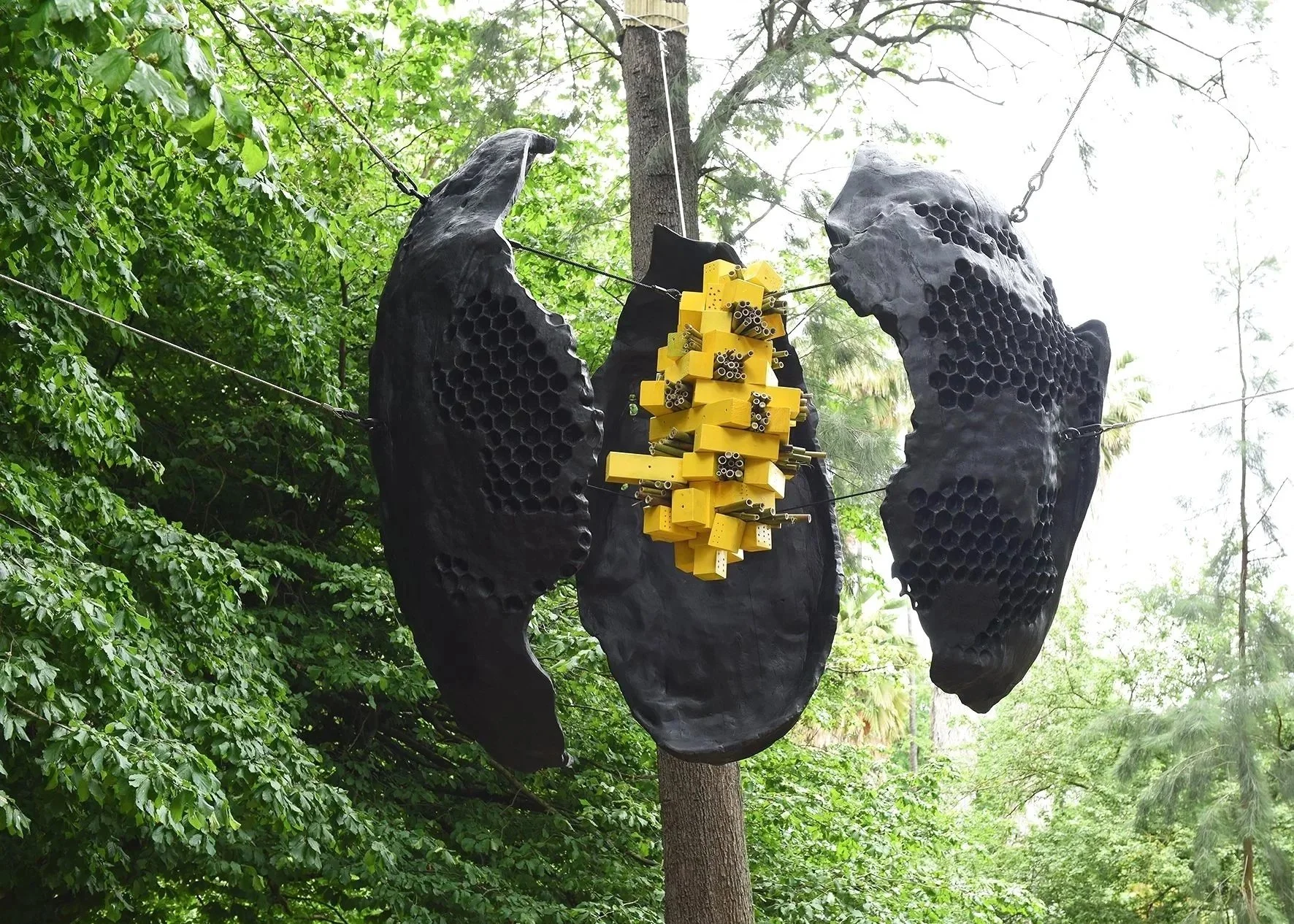
API-LOGO, Orto Botanico di Roma, 2026 — 260cm
THE VIDEO PROJECT
The Grammar of Bees
Here, the image is not representation: it inhabits the video, moves through it, alters it, makes it unstable. The video ceases to be an object and becomes language, built on two convictions: that language is not the exclusive property of humans, and that every species carries its own alphabet, its own grammar.
The hive is connected to a research network developed with Italy's National Research Council (CNR). Individually tagged bees are recorded by sensors, cameras and microphones as they perform the waggle dance, the coded language by which a colony shares the location of food, water and new ground. That data feeds both ongoing scientific research and BeeMap, an interactive, real-time cartography of the colony's movements.
Housed in the capanna, an organic timber shell shaped like a nest, approximately 9.10m in height and 4.90m in diameter at its base, the installation holds six black screens arranged in a hexagon, a floor projector casting the evolving BeeMap onto the ground, and a 360° sound system of six speakers and a subwoofer. A real-time engine renders the colony's activity live: yellow for the waggle dance's movement, violet for vibration and sound, white for the bee's own trajectory, a living grammar layered on black.
The project is guided by a scientific committee including Prof. Tim Landgraf (Freie Universität Berlin, Biorobotics Lab), Dr. Fernando Wario (ISTC-CNR, Rome), Dr. Giacomo Di Matteo (Sapienza Università di Roma), Prof. Ed Bilous (The Juilliard School), Prof. Randolf Menzel (Freie Universität Berlin) and Prof. Aurore Avarguès-Weber (UNESCO for Women in Science fellow).
The installation is in preparation.
For info and sales please enquire directly HERE.